Earlier this week on their web site, Scientific American posted the article, “Evolving Creationism in the Classroom” complete with links to earlier articles and a state by state map of the “creationism controversy”. The article, in my estimation, didn’t have anything new to say other than to note Vice Presidential candidate Sarah Palin’s comments concerning creationism and evolution in schools. Even thought this particular article didn’t substantively advance the discussion, it is still a hot topic as evidenced by the 87 on line responses in two days.


I’ll confess, when I saw this article and the associated links, all I could do was sigh and think, “Here we go again”. Are we doomed to endlessly rehash the same arguments or is there some way we can resolve this and move on?
To call this a science and religion conflict is to miss the main sticking point. Really the conflict is between science and a particular reading of the Bible and not all of religion. Not even all of Christianity. It’s time for Christians of various viewpoints to talk amongst ourselves. We should be talking (not arguing) but talking seriously about the Bible. What does it mean when we say the Bible is God’s Word? What do we mean by the “authority of Scripture”? Is there more than one legitimate interpretation of a Biblical passage? How do we manage differences of belief?
Christianity is not well served when BIblical interpretation devolves into the false choice of Biblical literalism or the abandonment of Scripture. The Christian tradition has long held that there is more than one way to interpret different parts of the Bible. It is tragic when the richness of the tradition is ignored and people are pushed into the false choice between literalism and abandoning their faith.
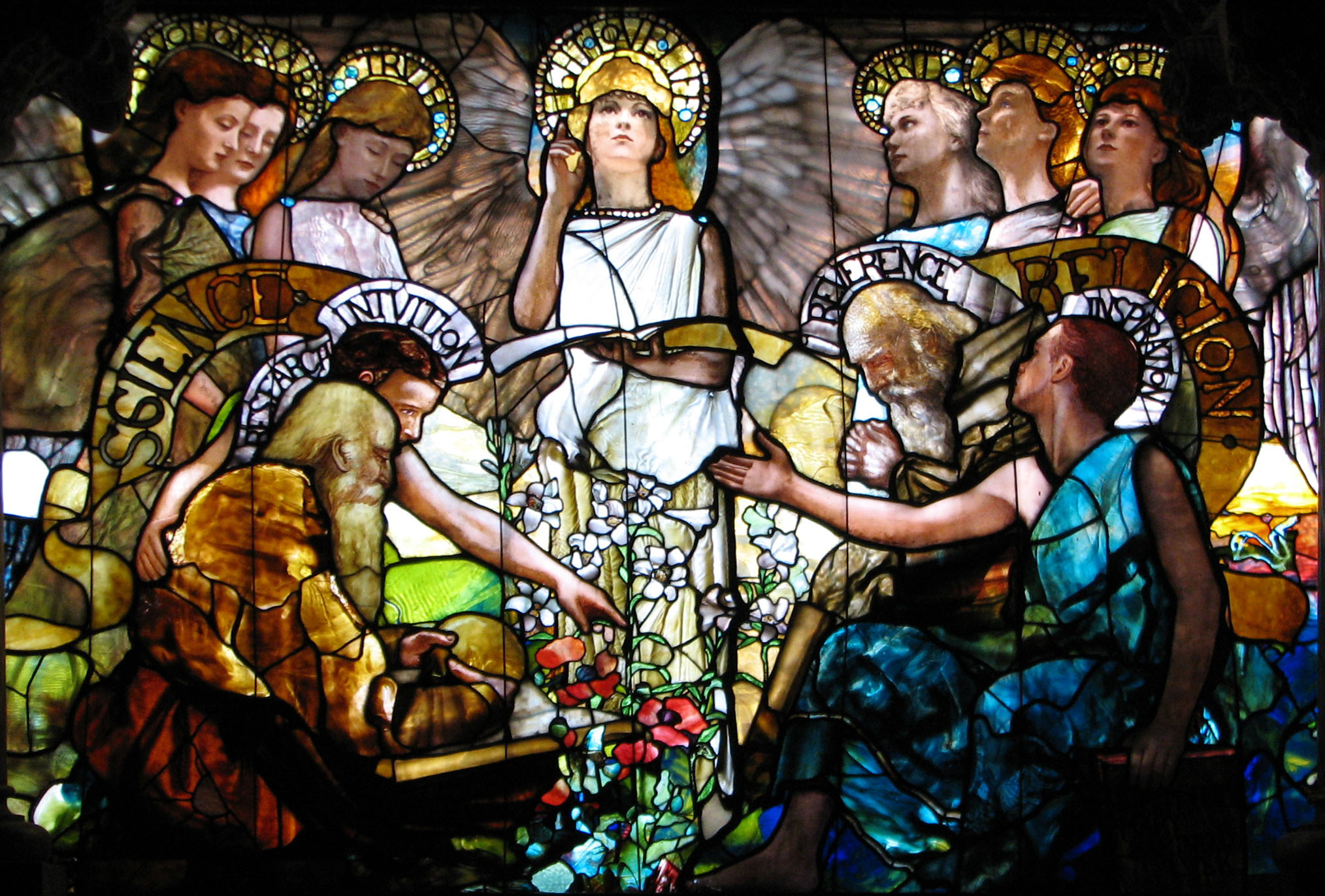 There is of course a larger worldview question in the science and religion debate. That is the worldview of what has been termed “scientism” versus the worldview of theism. This also is an important discussion for us to have. All too often there is confusion about the project of science as a method for understanding the physical world and the philosophical position of scientism. It is easy to slip from science into philosophy. It’s a good idea to consider the philosophical and ethical implications of science. We need to have those discussions. Let’s just be clear and intentional about what we are doing and not mislabel philosophy and ethics as science.
The important worldview discussion is not well served when it devolves into a creation, ID, evolution debate. There is much more to it than that. There are many more ways each of these worldviews shapes our society, some we recognize and some we don’t. Stepping back to consider the big picture might help us achieve some clarity about what’s going on in the evolution/creation/ID debates.
As I think about this Scientific American article, I wonder, what did Scientific American hope to accomplish with this piece? It certainly isn’t about science. Does it move us toward clarity? Does it help us understand the worldview and the reasoning of those with whom we disagree? I am of course assuming that people on both sides of this issue sincerely want to resolve it. I could very well be mistaken. Just because I don’t like to argue endlessly doesn’t mean others don’t.
I’d like to know, what do you think?


 Conversation in Faith
Leave a comment