Magi and gifts. Epiphany is more about baby presents than politics, right? Sorry, no. The way Matthew tells the story of the Magi sets the actions of God and God’s kingdom in conflict with the actions of the Roman Empire. You can read the story in Matthew chapter two, here1.
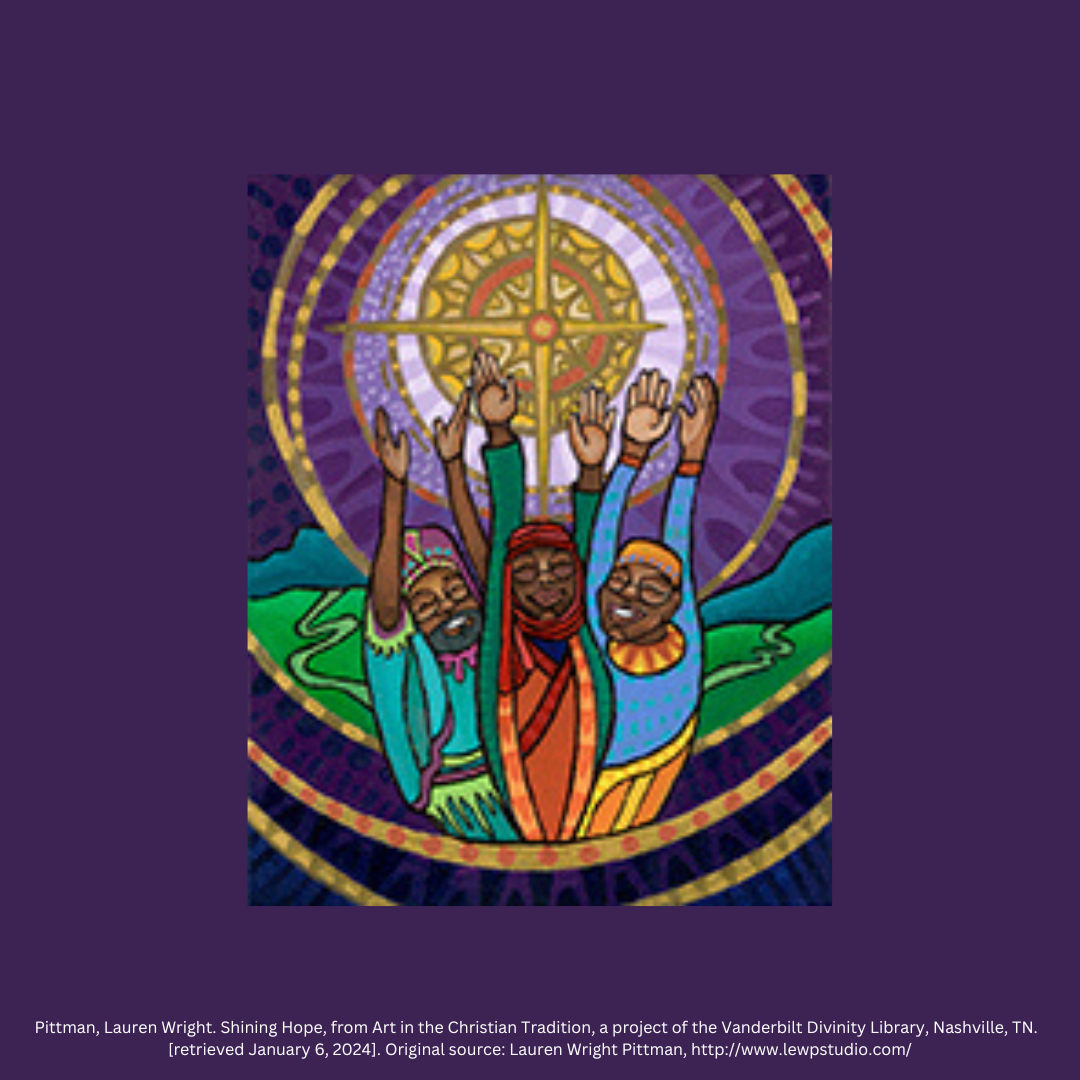
Matthew begins by locating us in a particular time and place, “In the time of King Herod, after Jesus was born in Judea”. Herod2 was a puppet king appointed by Rome. He was brutal, and politically savvy. He was appointed by the empire to be the King of the Jews. Magi, wise men, show up in Herod’s court.3 What is important for Matthew’s nativity is that they are gentiles and pagans, not Roman citizens or Jews. In a way they are double outsiders in this story. They do a not unsurprising but yet dangerous thing. They ask the current powerful and treacherous king of the Jews about the next king of the Jews. Herod knows they aren’t asking about his children. They are looking for Herod’s replacement. “All of Jerusalem” and Herod are frightened and threatened by this request.
Pause a moment and consider what Matthew has done. The people who should know about the Messiah and should be looking for the Messiah- the Jerusalem elites- are caught by surprise and frightened. Pagan Gentile foreigners have followed the signs and are actively seeking the Messiah to worship him. In the first seven verses of chapter two, Matthew has set the stage for conflict. The clueless and frightened Empire versus the true king of the Jews and his unusual followers.
A quick word about the star. In the ancient world, it was expected that the birth and death of important people would have various signs in the sky and on earth. So no matter if you think the star was a real phenomena or not, the first audience would expect Matthew to describe some of a sign to mark Jesus’ birth. It’s one of the ways, that Matthew lets his readers know that Jesus is an important person4.
Recall who Luke and Matthew portray as the first to know about the birth of the Messiah (besides Mary, Joseph and Elizabeth). For Luke its shepherds, probably Jews, but poor people with no power or authority living ordinary rural lives. For Matthew its foreign pagan gentiles. Both the shepherds and the Magi, go to see the child once they know of his birth.
Who doesn’t know about the birth of the Messiah? Representatives of the Roman Empire and the religious elites. Please consider that this is intentional on both Luke’s and Matthew’s part. Remember the nativity stories are prelude or overture 5. Both writers are setting out themes they want us to be alert to. Who recognizes who Jesus is and how they respond is one of those themes.
Luke’s gospel has angels informing people and Matthew’s gospel uses dreams. The dreams come to Joseph, a regular person of ordinary status and wealth6, a faithful Jew. Dreams come to the Magi, pagan, Gentile, people with some authority and wealth. In Matthew’s gospel, it’s not who one is, or even if one is willing to listen, it’s how willing one is to respond.
Back to Matthew’s story. After talking to Herod, the Magi continue on their way and find Jesus, where they give him gifts and pay him homage. The Magi pay attention to a dream and go home to avoid reporting to Herod and becoming complicit in his plot against the child. Again, Matthew has set in contrast the dangerous King Herod with the faithful Magi.
Joseph has another dream and takes Jesus and Mary to Egypt and then they return after yet another dream and Herod’s death. Here, again, is an echo of the Old Testament Joseph7 who understood dreams and who lived in Egypt. There is also an echo of Moses’ story8. The pharaoh (king) perceives a threat and responds by killing children. Moses survives the threat to be the one who delivers the people from slavery to freedom. It’s not a close correspondence, but remember the stories echo and rhyme. The first readers (and also us) are supposed to see the links between the past and the present. They (and we) are to remember how God has been at work in the past and recognize God’s actions in their present time.
Chapter two ends with the terrible story of the massacre of the infants in Bethlehem. People debate whether this story is historically accurate or not. It is certainly in character for Herod to act this way. Why include this tragic story? Matthew is making it clear to us that the empire will not give way without a fight. The empire doesn’t care who suffers. What matters is preserving their power. Herod and the Roman Empire will do what they believe they need to do to retain their status and power.
The quote in verse 18 about Rachel’s weeping for her children, is from Jeremiah 31:15. In Jeremiah the verse is at the start of the promises of restoration for Israel. There is weeping and yet also there is “hope for your future” (Jeremiah 31:17).
The nativity story ends with the death of Herod and another dream for Joseph. Joseph, as always, is obedient to the dream’s instructions. But even though Herod is dead and the Holy Family have returned to Israel, they are still not safe. Archelaus9 is the new ruler and he is just as bad, if not worse than his father. Joseph, fearing for the child’s safety, moves his family to Nazareth.
The Messiah is born, but he is not safe from the empire. The Messiah is born and those around him are not safe from the empire. As George Lucas and my New Testament professor said, “the empire (always) strikes back”.
The story of Epiphany is a political story. How will we live? Empires come and go, but there is always an empire. Will we live in the current empire and participate (directly or indirectly) in its cruel and crushing ways? Will we listen to God in whatever way God speaks to us? Whether it’s via an angel, a dream or “foreigners”? Will we not only listen but follow? Or will we be afraid? Afraid of losing power, or status? Or will we risk looking for and working for the life giving empire of the Messiah?
- https://bible.oremus.org/?ql=571598371
↩︎ - https://en.wikipedia.org/wiki/Herod_the_Great ↩︎
- Magi are probably polytheistic priests who historically had access to Persian kings and as a result of their abilities with astrology/astronomy and other knowledge, they were also a threat to kings. Some people took the Magi seriously, some people thought they were unreliable bearers of nonsense see, Matthew and the Margins: A Sociopolitical and Religious Reading by Warren Carter, Orbis Books page 74-75 ↩︎
- Matthew also does this through the genealogy and the way his nativity story echoes the story of Moses and Joseph. ↩︎
- For more about all of this, see my earlier blog posts on “The Politics of Advent” ↩︎
- In the first century CE, to be an ordinary person was to be poor and with very limited power over one’s situation. ↩︎
- Joseph’s story is in Genesis 37-50. ↩︎
- Moses story is told in Exodus. Exodus 1 and 2 tell the story of Pharaoh’s murder of the children. ↩︎
- https://en.wikipedia.org/wiki/Herod_Archelaus ↩︎
 Conversation in Faith
Leave a comment