Have you ever seen something on social media or heard someone say something and think, “Something is off about this.” We are surrounded by words, written and spoken. We need to be able to think critically about what we read and hear. You and I are not required to respond to every comment in real life or on social media. We all have differing capacities to engage in public discourse. At the same time, it is helpful for us to stop and think about what we are reading and seeing. It is helpful for us to be curious and to wonder why someone said or wrote what they did. What message or information are they imparting? What assumptions are being made? Why does this resonate with me or why does it make me uncomfortable? Ask yourself some questions. Be curious.
Let’s practice. A while ago, I saw this.1
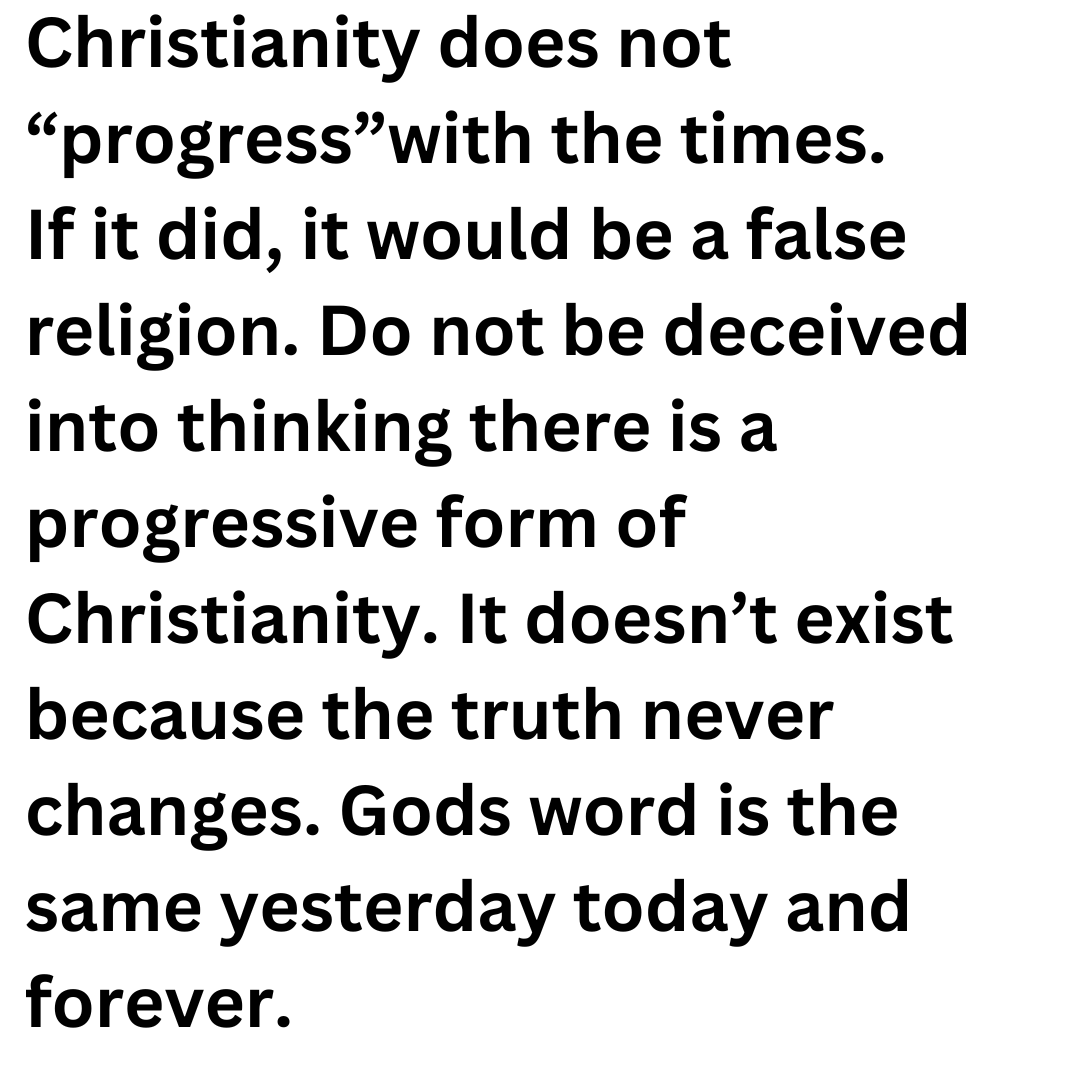
The point of this statement is to discredit progressive Christianity as a “false religion”2. Let’s think about the claims made here. Honestly there is a problem with every sentence. We could spend a lot of time talking about the problems in this statement. But let’s not. Let’s just hit the highlights.
“Christianity does not “progress” with the times. If it did, it would be a false religion.” What do they mean by this? What version of Christianity are they talking about? If Christianity should not progress with the times, when was the proper time to stop progress? What the first disciples practiced and believed? What the first century church practiced and believed ? What the Reformers practiced and believed? Christian theology has changed, it has grown and matured. Changes happen because people think, discuss, and debate what it means to be a Christian in their time and place. Can a religion that won’t or can’t change be able to adapt to the needs and reality of society as society changes? Perhaps they are talking about Biblical Interpretation? Well, the earliest church didn’t have what we now call the New Testament. Jesus didn’t write anything down. So are the written texts a problem? We have changed the texts from their original language into English. Is that change a problem? There is a lot in the first two sentences to wonder about.
Perhaps the concern about “progress” is a worry that progress will necessarily change “Truth”. Here we need to ask what “truth” are they talking about?
Some things we think are true, do change. People used to think the sun revolved around the earth. There was a time when that would have been a true statement. But now we know differently and that statement is no longer true. In a similar way, some of the things we think are true about God, may not actually be true. I believe there are some absolutely, unchanging truths about God. The question is, are we able to correctly name and understand them? Can we ever fully, definitively understand God? Paul writes about the fact that people’s faith grows and matures.3 We might ask, who gets to define “truth’? Who gives the authoritative statement about what is true and not true?
Next let’s consider the sentence “Gods word is the same yesterday today and forever.” 4Does that sound familiar? It sounds like a Bible verse. I tried to look it up. The closest I could find was Hebrew 13:8 “Jesus Christ is the same yesterday and today and forever.” This is an example of someone evoking a passage of Scripture but not actually quoting scripture. We should ask, what do they mean? What are they trying to do? When they talk about God’s word do they mean Jesus or the Bible? Jesus certainly changes some of what is in the Bible. In the Sermon on the Mount (Matthew 5), Jesus says several times, “You have heard that it was said… but I say to you…” . Peter has a vision where he is told that, for Christians, Jewish laws around foods were removed (Acts 10 and 11). These are not the only examples, but again, you get the point. I would agree that there are some truths in the Bible that are unchanging. The issue again, is what are they and who decides?
This is one social media post out of many. Honestly, this isn’t even the worst one I’ve seen today. I think we need to develop our capacity to critically assess this sort of statement when we come across them. When we think that something is “off” about them, we should take a moment to articulate- at least to ourselves- what that is.
In this example, this social media post rather high handedly dismisses the faith of serious, sincere progressive Christians.The author of the post assumes and declares that their understanding of what it means to be Christian is the only one. There is no invitation to discussion, to discernment, to reflection. The author is forgetting (or ignoring?) that Jesus loved a good debate. Jesus asked a lot of questions to engage in discussion.
One way to think about the history of Christianity, is as a long conversation about what it means to be a follower of Jesus. There have been many discussions and disagreements. The idea that at some point there existed a perfectly correct way of being Christian simply isn’t true. Faithful people disagreed right from the start. That’s in part why Paul (and others) wrote all those letters we have in the New Testament. We have always had better and worse theological beliefs. None of us is entirely correct. Whatever we say about God can always be improved.

To reiterate, I’m not saying you and I must respond to every single problematic statement on social media. No one has time for that. On the other hand…
Bad theology damages and even kills. Bad theology drives people away from Jesus. Bad theology causes people to lose their faith. Bad theology should not go unchallenged. We can all do better. We need to be thoughtful and faithful. We need to think about what we post and repost. And we need to be willing to push back and to offer an alternative view to damaging theological statements.
+++++++
As you may know, normally I post on Fridays. This week it took me longer to get this post in acceptable form. And so I am now posting it less than 24 hours after an assassination attempt on Donald Trump. Already the “hot takes” and memes have started, some theological and many political. Again friends, you do not need to respond to every questionable comment and posting. And again, you and I do need to thoughtfully and critically reflect on what we are reading and hearing. Be curious, wonder why people are saying what they are saying. What assumptions are they making? What values are they promoting? Think about what you believe and why you believe it.
- I have not cited the source of this because I want to engage the ideas and not criticize the person who wrote this or who posted it. (Not the same person.) Also I have not fixed any punctuation errors. ↩︎
- Progressive christianity does not have a generally agreed upon definition. Unlike Evangelicalism that has been interested in carefully defining itself ↩︎
- See I Cor 3: 2-3 and 13: 9-12 and Ephesians 4:12-16 among other examples. ↩︎
- Again, I have not corrected any punctuation. ↩︎
 Conversation in Faith
Leave a comment