Stories of miraculous healing in the gospel’s can be problematic for modern people. There is the perennial question of did it actually happen. There are significant theological implications if it did happen and there are significant theological implications if it did not happen.
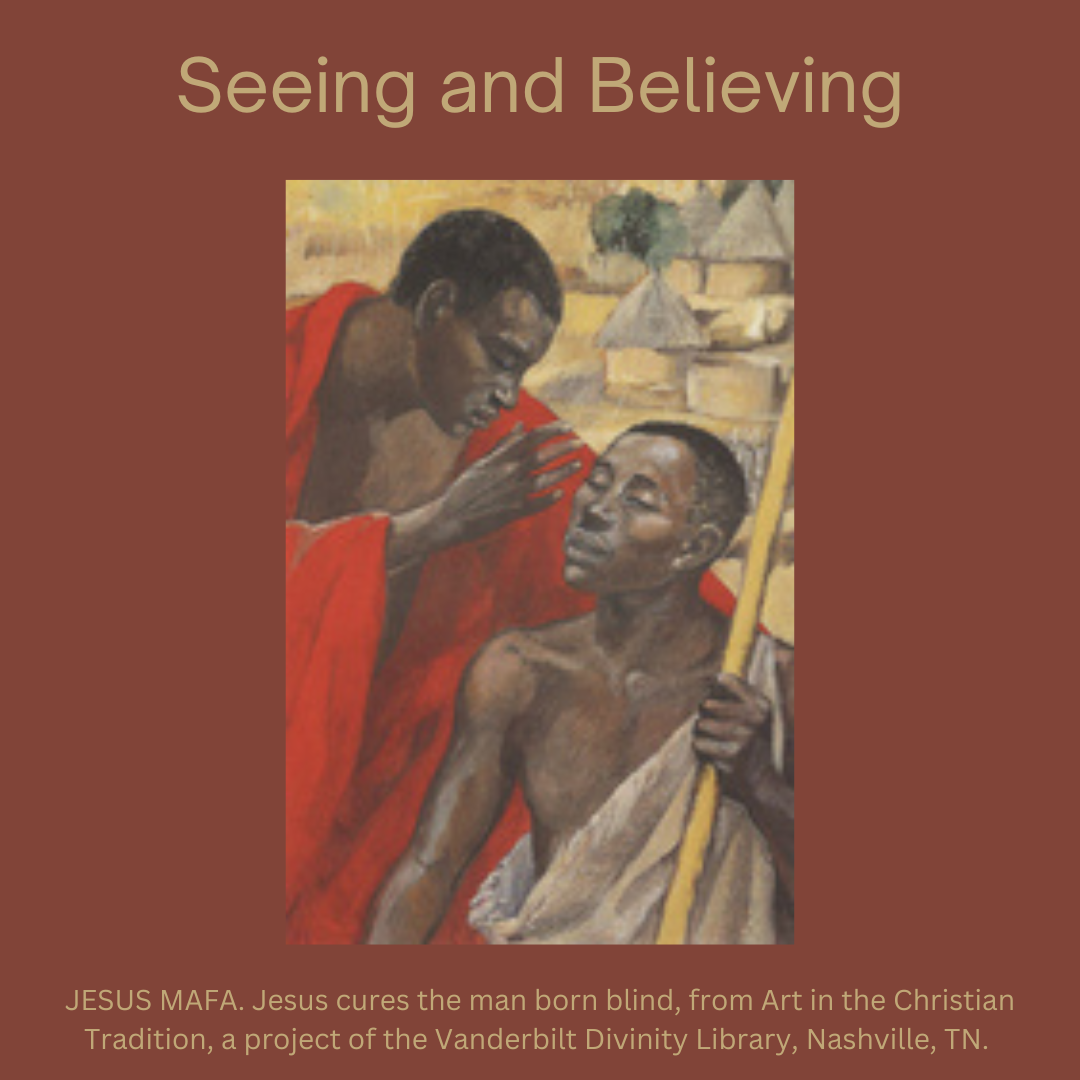
How we regard persons with disabilities today is different than it was in the first century. Having worked with and known people with both hearing and visual disabilities, I know that many do not think they need to be healed. They understand themselves to be fully and completely human as they are and not in need of healing any more than any other person. Their self knowledge means we need to think carefully and deeply about the healing stories in Scripture.
What was meant and understood in the first century may not be applicable in the same way today. This doesn’t mean the gospel stories about healing have no value today.
The gospels are not simple history or biography. They are best understood as theology told by way of biography. The gospel writers, Mark included, want to tell us some important things about God and Jesus through the story they tell. They want us to understand how God through Christ is at work in the world. They want us to understand more fully what God is like and what God’s intentions for the world are.
Asking ourselves, “Did this happen, exactly as written?” may not be the most helpful question. More helpful questions are, “Why is the writer telling us this story in this way? Why was this story important? What does this story tell us about God? About us? And about the relationship between God and humankind?” With those questions in mind, let’s think about this story of Bartimaeus.
They came to Jericho. As he and his disciples and a large crowd were leaving Jericho, Bartimaeus son of Timaeus, a blind beggar, was sitting by the roadside. When he heard that it was Jesus of Nazareth, he began to shout out and say, “Jesus, Son of David, have mercy on me!” Many sternly ordered him to be quiet, but he cried out even more loudly, “Son of David, have mercy on me!” Jesus stood still and said “Call him here.” And they called the blind man, saying to him, “Take heart; get up, he is calling you.” So throwing off his cloak, he sprang up and came to Jesus. Then Jesus said to him, “What do you want me to do for you?” The blind man said to him, “My teacher, let me see again,” Jesus said to him, “Go; your faith has made you well.” Immediately he regained his sight and followed him on the way. Mark 10:46-52 NRSV
How Mark uses this story in his gospel is interesting. In Mark’s gospel, Jesus predicts his trial, crucifixion and resurrection three times. Each time the disciples misunderstand what Jesus means. And each time Jesus explains to them, and to us, what discipleship in the kingdom of God looks like.1
In Mark’s gospel there are two stories of a blind person receiving their sight and they bookend the passion predictions. One is just before the first passion prediction2 and the the second, story of Bartimaeus, is just after the third passion prediction. I don’t think this is a coincidence and I don’t think it is simply a happy historical accident. Mark is hoping we “see” what’s going on. He wants to be sure we see and pay attention to what Jesus is saying about himself and about what it means to be a disciple.
In the first healing Jesus sends the person back to their home. In the second healing, Bartimaeus follows Jesus “on the way”. “On the way” carries a double meaning. Perhaps it means Bartimaeus followed Jesus on the way to Jerusalem, with the other disciples. Also early Christians were called followers of “the way”.3
Mark does something else interesting with this story. It comes directly after James and John ask to sit at Jesus’ side. In each story someone has a question for Jesus. James and John say to Jesus, “Teacher, we want you to do for us whatever we ask of you.” Bartimaeus calls to Jesus, “Jesus, Son of David, have mercy on me!”
Jesus response to both questions is similar, “What do you want me to do for you?”
That’s the question, isn’t it? What do we want Jesus to do for us? What would you say if Jesus asked you, “What do you want me to do for you?”
James and John ask for power and authority. Jesus tells them, and us once again, that to be “great” one must serve and the first must be slave of all. Followers of Jesus must do as Jesus does. Bartimaeus wants to see. His faith, his ability to entrust himself to Jesus makes him well.
Do we see what sort of life Jesus calls us to?
In American culture, power and influence and authority are prized and valued by people of faith and people of no faith. Power and influence and authority are prized and valued by individuals and by institutions- including the church. Jesus is clear that power and influence and authority are not values of the kingdom of God.
Do we believe Jesus when he tells us what it means to see him and to follow him?
- Mark 8:31-38; Mark 9:31-49; Mark 10:32-45. See also the last few weeks of this blog. ↩︎
- Mark 8:22-26 ↩︎
- See Acts 9:2; 19:9,23 ; 22:4; 24:14,22 ↩︎
 Conversation in Faith
Leave a comment