Control. The very human temptation to control is ultimately about power over others and perhaps also rooted in fear. The fear of differences. The fear of being controlled.
Some theologians say the original sin was and continues to be idolatry, revealed by our desire to be gods. But tangled up in that idolatry are some control issues. Wanting to control access to knowledge. Wanting to control one’s self and the ability to determine one’s actions and future. Wanting to control others.
What continually confounds and confuses us is that God isn’t all that concerned about control or power. We project our desire for control onto our idea of who God is and how God acts. God, and God as revealed in Jesus does not force or compel or control.
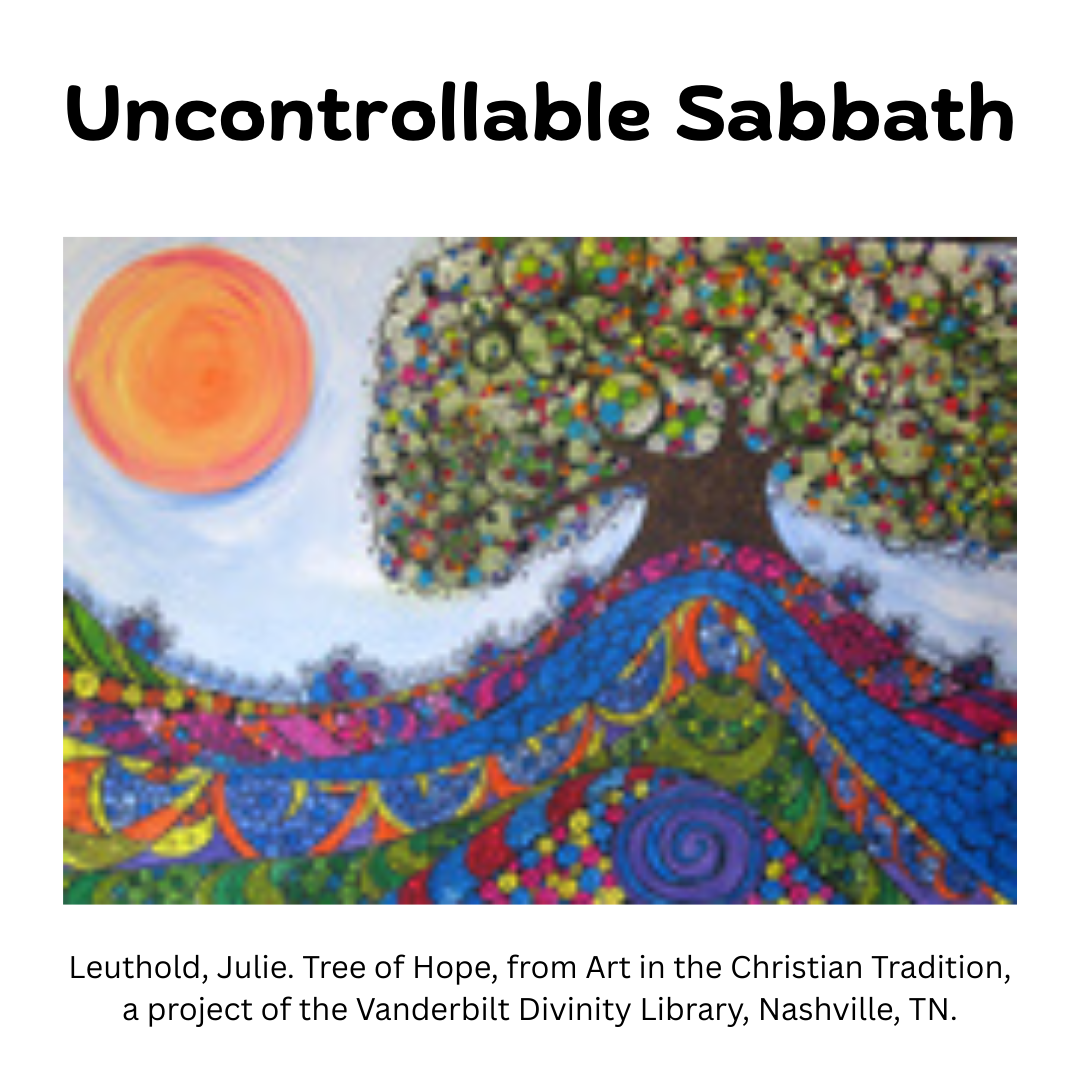
This week’s lectionary passage is a story about healing, and some would say it’s also about the value of women. Those are true, but I think it’s mostly this is a story about power and control. And how power and control have no place in the Kingdom of God.
Now he was teaching in one of the synagogues on the Sabbath. And just then there appeared a woman with a spirit that had crippled her for eighteen years. She was bent over and was quite unable to stand up straight. When Jesus saw her, he called her over and said, “Woman, you are set free from your ailment.” When he laid his hands on her, immediately she stood up straight and began praising God. But the leader of the synagogue, indignant because Jesus had cured on the Sabbath, kept saying to the crowd, “there are six days on which work ought to be done; come on those days and be cured and not on the Sabbath day.” But the Lord answered him and said, “You hypocrites! Does not each of you on the Sabbath untie his ox or his donkey from the manager, and lead it away to give it water? And ought not this woman, a daughter of Abraham whom Satan bound for eighteen long years, be set free from this bondage in the Sabbath day?” WHen he said this, all his opponents were put to shame, and the entire crowd was rejoining at all the wonderful things being done by him. Luke 13:10-17 NRSVue
Sometimes Christians are quick to declare that Judaism in the ancient world was all about rules and control. They are equally quick to declare that Jesus and Christianity are all about freedom and liberation from rules. A little self reflection will put that false dichotomy to rest.
Sometimes people who grew up in West Michigan, where I now live, tell me about the Sabbath rules they grew up with. On Sunday they went to church twice, morning and evening. Routine chores were not done, no car washing, no lawn mowing. There were acceptable kinds of play for children. There was a strong cultural prohibition against activities that disturbed their churches’ ideas about the Sabbath. In many other places there were “blue laws” that restricted shopping or entertainment.1 The sale of some items, alcohol in particular, was prohibited on Sundays. In several states car dealerships must be closed on Sunday. Let’s not be too quick to judge the leader of the synagogue. The desire to control the activities of other people, especially around religion, is a human problem.
The healing of this woman on the Sabbath wasn’t the only time in Luke’s gospel that Jesus challenged the accepted Sabbath rules. Luke has four stories about this.2 Three of them involve healing. What is Jesus up to? Is he just healing on the Sabbath because he can? Is he saying anything goes on the Sabbath? Is he advocating for no rules? He’s up to a few things. One of which is that he is making the claim that “The Son of Man is lord of the Sabbath.3
I think Jesus is also making a statement about what the Sabbath is.
The Hebrew word shabbat, where the English word Sabbath comes from, means to cease or desist. Historically the Sabbath was a day of rest and the cessation of work. It was an important marker of Jewish religious practice. Jews rested on the Sabbath because God rested after creating the cosmos. Sabbath rest also gave everyone and everything the opportunity to rest because of Israel’s experience of enslavement and forced work in Egypt. Sabbath rest was based in compassion for all people and animals.4
In the Bible, rest itself is not taking a nap or getting a good night’s sleep. It is not simply inaction. It is not passive. Rest is also a “state of peace, contentment, and tranquility, with reference to the individual soul (Ps 116:7), communities (Jer 6:16), and the entire earth (Isa. 14:7).” 5 A time of rest is a time of peace. It is not only the absence of war, but also this rest is a time of shalom where people rest in communion with God.
Look at the language Jesus uses in this story of Sabbath healing. Twice he says “set free”. This woman, and the rest of us, are set free on the Sabbath. We are set free from the things that keep us in bondage. We are set free to live “on earth as it is in heaven”.
The Sabbath ought not to be defined by what we cannot do. The Sabbath is an opportunity to step into what we can be, who we were created to be. On the Sabbath we set aside the struggles and worries of life, as best we are able. It is a time to care for our souls. That can be with family, or alone. It can be through the arts, or a walk in nature. It can be working in your garden. Playing with friends and family. Worship that frees our souls is part of this. Sabbath is a weekly reminder, even when it is not fully realized, about what God wants for our lives.
Sabbath rest is an opportunity for us to live into the kingdom of God. Resting from work is an act of stepping away from the demands of capitalism. We remove ourselves from the cultural requirements to be productive. We stop, at least weekly, defining ourselves by what we do, what we accomplish, and who society tells us we are. Sabbath reminds us that we are not controlled by the powers of the state or the expectations of society. Sabbath reminds us that we can live differently. Sabbath reminds us that we belong to God. Sabbath reminds us that we are loved without measure by God.
- https://en.wikipedia.org/wiki/Blue_laws_in_the_United_States ↩︎
- Luke 6:1-5; 6:6-11; 13:10-17; 14:1-6 ↩︎
- Luke 6:5 ↩︎
- David A. Glatt-Gilad, Jeffrey H. Tigay, Mark Allan Powell “Sabbath” in HarperCollins Bible Dictionary, Revised and Updated, Mark Allan Powell, General Editor HarperOne 2011, page 900 Kindle edition ↩︎
- Roger S. Borass, Mark Allan Powell, “Rest” in HarperCollins Bible Dictionary, Revised and Updated, Mark Allan Powell, General Editor HarperOne 2011, page 875 Kindle edition ↩︎
 Conversation in Faith
Leave a comment