Hello Readers: I spent last weekend at a conference for young adults and so I haven’t been able to spend as much time writing and keeping to my regular posting schedule. This week I’ll have two shorter posts, last week’s gospel and this week’s.
Sometimes Jesus’ sayings are clear. Sometimes they are not. When they are unclear, often looking at the context helps- where was Jesus, who was he talking with, what came just before or just after his saying. Sometimes, as with this week’s passage, Luke tells us that Jesus is speaking with the disciples. But what Luke tells us sounds like he put several sayings together, and they don’t seem particularly connected. It’s all a bit confusing.
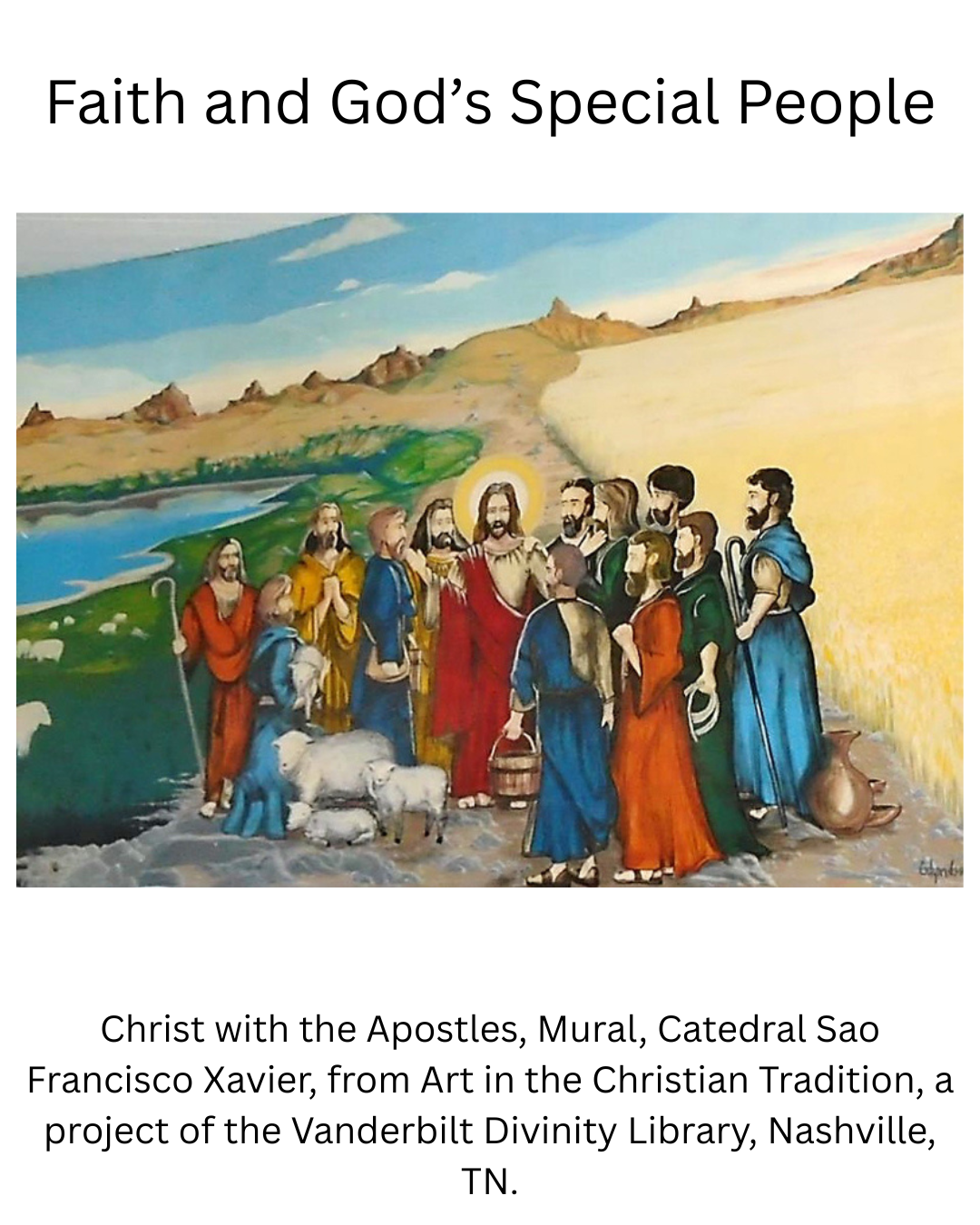
Immediately before today’s text, Jesus tells the disciples that even though “occasions for sin are bound to come” it would be better to have a millstone hung around your neck and be thrown into the sea than cause the “little ones to stumble.” Then he tells them to correct a sinning brother or sister. Next Jesus says if someone repents the disciples must forgive, even seven times a day.1 And then Luke writes this:
The apostles said to the Lord, “Increase our faith!” The Lord replied, “If you had faith the size of a mustard seed, you could say to this mulberry tree, ‘Be uprooted and planted in the sea,’ and it would obey you.
“Who among you would say to your slave who has just come in from plowing or tending sheep in the field, ‘Come here at once and take your place at the table’? Would you not rather say to him, ‘Prepare supper for me; put on your apron and serve me while I eat and drink; later you may eat and drink’? Do you thank the slave for doing what was commanded? So you also, when you have done all that you were ordered to do, say, ‘We are worthless slaves; we have done only what we ought to have done!’” Luke 17:5-10 NRSVue
It’s difficult to see the relationship between these sayings. Did Luke have these particular sayings and not wanting to leave them out, combined them and put them here? The next verse (11) starts, “On the way to Jerusalem”. Is that a clue for us? Were Jesus and the disciples walking along and talking, and as they passed a mill and a mulberry tree and a farm, Jesus used them as examples? We don’t know.
Why do the disciples ask for more faith? Are the disciples asking for more faith so they can avoid causing others to stumble? Are they asking for faith in order to repeatedly forgive? Do they think they are lacking in faith? Most of the time the disciples seem to think they have plenty of faith. Or are they asking for some other reason?
Jesus saying about the mustard seed is Sometimes used to chide people for not having enough faith or not truly believing. If you had the tiniest amount of mustard seed like faith, the bad thing wouldn’t have happened. Or the good thing would have happened. Either way, you are responsible for what happened. It’s your fault. You lack faith.
For Luke, faith is made real in faithfulness- in actions. The disciples are asking to be faithful people, who behave in faithful ways.2 Perhaps they are asking for the ability to not cause someone to sin and to be able to forgive the repentant. Does Jesus’ response mean that he thinks they are lacking in the ability to be faithful? Or is he reassuring them that the smallest amount of faithfulness matters, and is more than sufficient? Or is it a bit of both? Jesus example is odd. Why would we even want a mulberry tree to be planted in the sea? Did Luke get the saying wrong or is Jesus saying that even a small amount of faith can result in entirely unexpected results?
Then Jesus tells a parable that for modern Americans is unsettling. Given our history with slavery, for most of us, the almost casual way slavery is talked about in the Bible is a problem. These texts have been misused to argue that God approves of slavery- It’s in the Bible! But if we alter the language to “servant” we risk misunderstanding the relationships in the parable. The opening phrase, “Who among you…” assumes a negative reply, no one would thank a slave. It’s confusing that the point of view shifts in the parable. The hearer begins in the role of the master but by the end of the parable, we are shifted to the role of slave.
Joel Green reminds us that as modern readers we misunderstand what thanking the slave means. It’s not a verbal nicety. Or a sign of appreciation for a good meal, as we might thank a waiter in a restaurant. Jesus isn’t talking about good manners. Green writes, “In the master-slave relationship, does the master come to owe the slave special privileges because the slave fulfills his daily duties? Does the slave, through fulfilling his ordinary duties to the master, becomes his master’s patron? Of course not! Similarly, “worthless slaves” (V10) refers to slaves to whom no favor is due (and not to uselessness).”3
Green’s explanation is helpful in allowing us to hear this parable more in line with what the original audience might have heard. In the first century people lived in a patronage system rooted in ideas of honor and shame. It was unthinkable for a master to be indebted to their slave. Even knowing this the parable is still very unsettling. Even if we transpose the parable from slave/master to servant, a la Downton Abbey, it still doesn’t feel right.
Our modern culture has acclimated us to expect praise for doing almost anything. Don’t get me wrong, I think that thanking people is good. I think praising people for a job well done is good. And this isn’t a comment on the “participation trophy” culture we find in some places. I don’t think this parable is saying that no one should ever be thanked or recognized. Or that we are worthless and don’t deserve acknowledgement or praise.
I’ll speak for myself here, and try not to make assumptions about you. This parable unsettles me because at some level, I want God to like me best. No matter how spiritually advanced (or not) I may be, some part of me still thinks I can earn God’s approval and God’s love. At least part of what this parable says is that we don’t earn extra divine favor by doing what God expects us to do. Not because we are unlovable. Not because God is dismissive of our efforts. But because God can’t love us anymore than God already does. The parable doesn’t explicitly talk about God’s love, but the reality of God’s love for us is throughout the Bible. As we move through our day, doing our work, plowing or tending, preparing a meal, all the things we do; God’s love and presence is with and around us. God’s love for us isn’t dependant on what we do or how we do things. It simply is. It is the air we breathe. It is the ground we walk on.
Obedience or faithful living isn’t a way to achieve honor or gain a reward. Helping others grow in faith, forgiving sinners and reconciling them back into community, taking care of each other through the work we do is simply how we live as disciples. This is to be our ordinary, everyday life. If all of us live like this, it becomes normal, and routine. Our actions are not a cause for reward or extra divine love. But if we do live like this, extraordinary things can happen, astounding things can happen, mulberry trees can be planted and grow and flourish in surprising places. What a world of joy and wonder, it would be.
 Conversation in Faith
Leave a comment