The word “parable” comes from the Greek words para– alongside and balo– to cast or to throw. Often we have been taught to read parables as allegory or metaphor. And sometimes they are meant to be read that way. Sometimes, they are used to provide comparisons or contrasts between the world as it is and the world God hopes for. The comparison or contrast helps us gain insight into Jesus’ message about the kingdom of God. They challenge our comfortable categories. They push us to rethink and reconsider what is normal and what is desirable. If we get our interpretive categories wrong, we misunderstand the parable. In the parable of the unjust judge, if we imagine the judge as God, we will misunderstand the parable. If we imagine the parable as a critique of Jewish law, we also will misunderstand the parable.
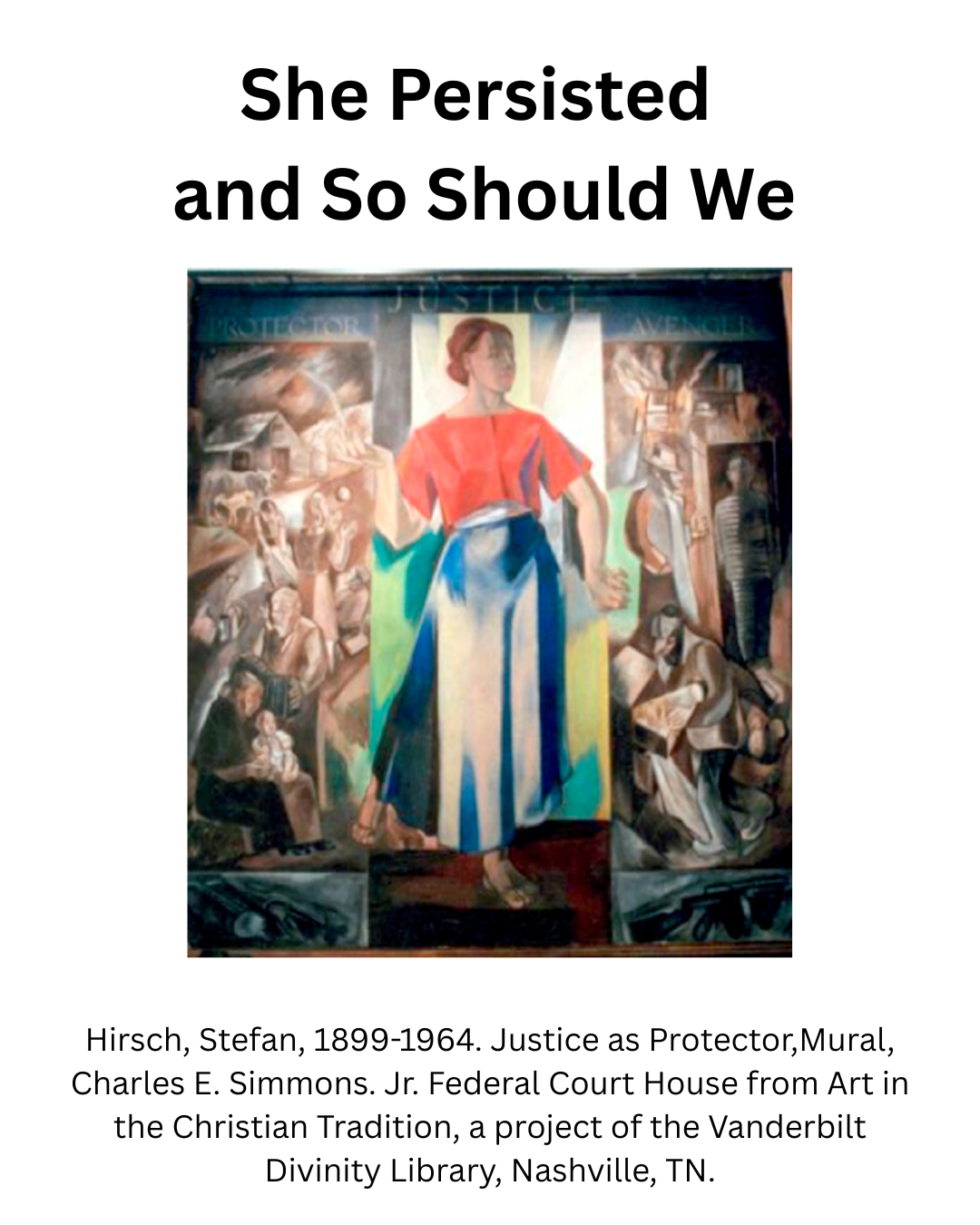
Then Jesus told them a parable about their need to pray always and not to lose heart. He said, “In a certain city there was a judge who neither feared God nor had respect for people. In that city there was a widow who kept coming to him and saying, ‘Grand me justice against my accuser.’ For a while he refused, but later he said to himself, ‘Though I have no fear of God and no respect for anyone, yet because this widow keeps bothering me, I will grant her justice,so that she may not wear me out by continually coming.’ ” And the Lord said, “Listen to what the unjust judge says. And will not God grant justice to his chosen ones who cry to him day and night? Will he delay long in helping them? I tell you, he will quickly grant justice to them. And yet, when the Son of Man comes, will he find faith on earth?” Luke 18:1-8 NRSVue
There are two characters in this parable, the judge and the widow. We, along with Jesus’ audience, have ideas about how widows and judges ought to conduct themselves.
In both Jewish and early Christian culture, it was expected that widows would be taken care of, because the larger culture did not necessarily provide for widows. Concern for widows, orphans and the poor is found throughout the Bible. This short list, widows, orphans and the poor, became a way of speaking about people who were oppressed and distressed by society. Still, the Bible does not portray widows in a single way. Some are wealthy, some are desperately poor. Some have family to support , some are alone in the world. Some can advocate for themselves and some cannot. This parable does not tell us much about this widow. We don’t know her economic or social status. We don’t even know what the complaint was that she brought to the judge. What we do know is that widows, like everyone else should receive justice.
Judges, then and now, are expected to be fair and impartial. In those days and in ours, we know that not all judges meet that standard. We can recall Biblical examples of good and bad judges. The parable gives us a judge who does not fear God or respect people. Right away this looks like a problem. Does a widow stand a chance against such a judge?
This widow might. The widow wants “justice”. The Greek word translated as “justice”, carries the broader meaning of “to vindicate” or even “to avenge”. She wants her accuser held accountable for their actions. She isn’t timidly asking for some help. She is denied justice. She returns. She persists. She keeps coming back to the judge. Finally the judge says he will grant her justice ” so that she may not wear me out…” . The Greek word is a boxing term, meaning something like, “so she won’t give me a black eye. Whether the punch that would give the judge a black eye was physical or metaphorical, this widow wasn’t taking “no” for an answer. She believes she should have justice and she gets justice by not giving up.
Jesus used a familiar storytelling convention of comparing the lesser to the greater. If an unjust judge will do this, won’t our just God give us vindication and justice? This parable assures us that God hears our cries and that God will act. We are left wondering, how does God act? Does God act unilaterally, in a top down imposition of justice? Or does God act through us, through our prayers and our actions?
This is a parable about persistence. It’s not the first parable about persistence in Luke’s gospel. Earlier, Jesus told a parable about the person who in the middle of the night knocks on their neighbors door to get bread for guests? This person also, does not give up until they get what they need.1 Part of the message of this parable is that persistent action matters and achieves results.
Luke ends this story of the judge and the widow with Jesus asking, “…when the Son of Man comes, will he find faith on earth?” Faith is a frequent topic in Luke’s gospel and is described in a variety of ways. Faith is not only about a set of beliefs. Faith has to do with the way we live. Faith involves faithful behaviors. When we think about faith while reading this parable, the faith Jesus is looking for isn’t passively waiting for justice. We need to wear out the forces of injustice by our persistence. Like the widow, we are to keep coming back and demanding justice until justice is achieved.
Luke begins this story telling us that this parable is about the “need to pray always and not to lose heart.” We might be inclined to think that means this parable is about praying until our prayer is answered. That’s not wrong but like faith, prayer isn’t passive. But this parable challenges us to widen our ideas about prayer. Many of us were taught that prayer is talking to God and listening to God. We might have been taught that when we pray we close our eyes, bow our heads and fold our hands. Again, this is not wrong. And it is also not the only way to pray. This parable suggests that prayer is active, perhaps even so active a judge or a justice system receives a (metaphorical) black eye.
If you spend some time reading the works of Christian contemplatives and mystics, what you discover is they spend a lot of time focused on prayer. Often this begins as a personal journey of increasing unity with God. And this increasing unity with God also turns them outward into the world. It turns out that the more clearly we experience God, the more we recognize injustice in the world. Residing in God’s love means our hearts break at pain and suffering, and we cannot let the injustices of the world go on unchallenged. Guided and supported by prayer, we act. Our prayers become action. Our prayers are lived in the real world as we work for peace, justice and reconciliation. Loving God and knowing God’s love does not mean we abandon the world while waiting for the Kingdom of God to arrive. Loving and knowing God’s love means we enter more and more fully into the world, searching for signs of the Kingdom and working to bring God’s love and justice into the world.
Not all of us are called to bang on the judge’s door until justice happens. Some of us are called to public actions. Some of us are called to other actions, maybe making phone calls, or writing letters. Some of us may offer various kinds of support to those in more public roles. But all of us have something to do, something that calls out and confronts injustice. Something that helps work for the well being and flourishing of all. What does it look like for you to “pray always and not to lose heart?”
- Luke 11:5-8 ↩︎
 Conversation in Faith
Leave a comment