You may have noticed that this Lent my posts are focused on “Invited to…” . Biblical texts often have multiple themes and ideas to think about. In these times, of Christian nationalism, increasing anti Muslim rhetoric, anti LGBTQ rhetoric, and patriarchal rhetoric, it seems important for me to think about the various ways Jesus invites a wide variety of people into life in the kin dom1 of God. As we continue to move through the lectionary texts for Lent, consider the diversity of people Jesus invited, how he invites them, and what he is inviting them to become part of.
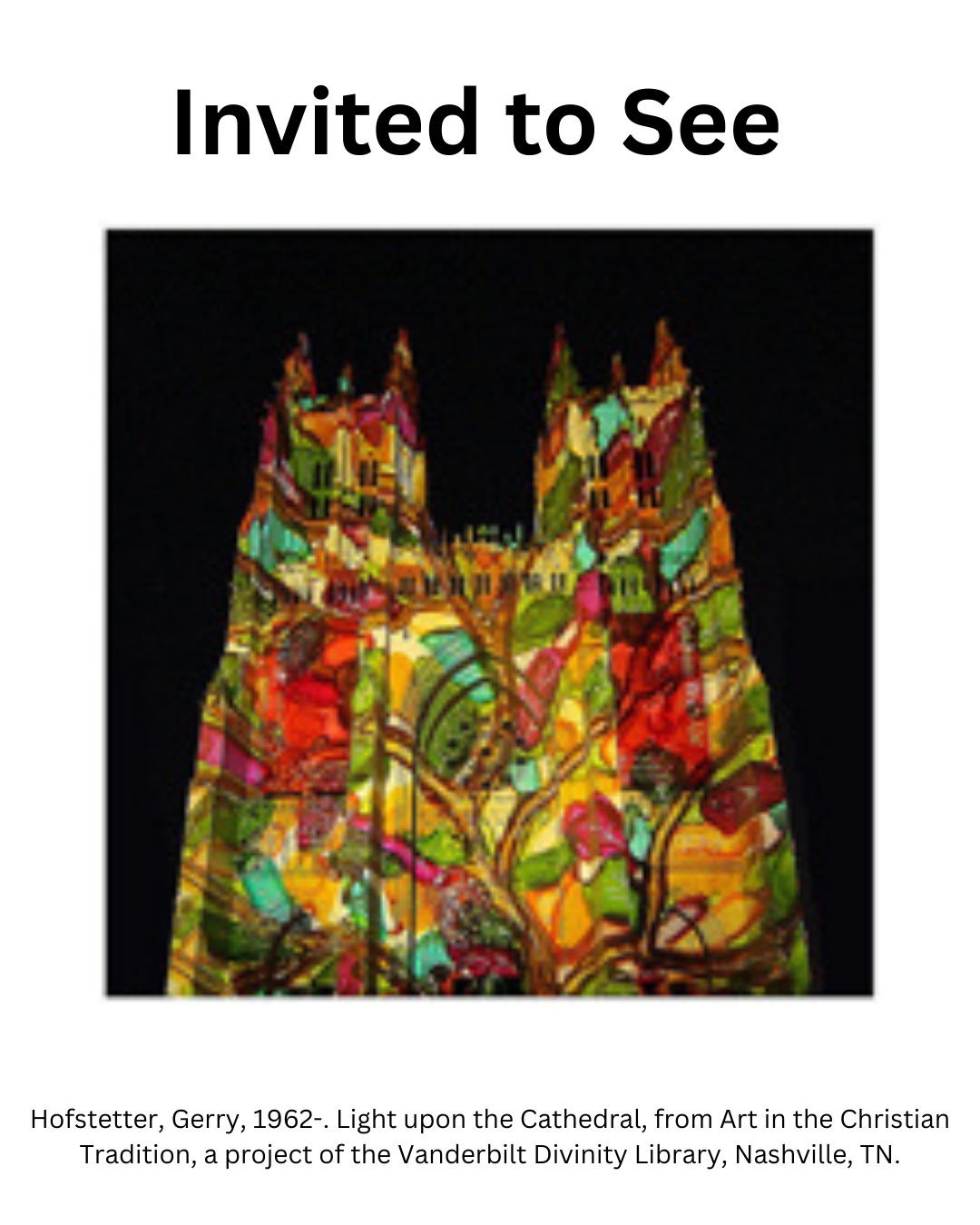
This is a story of a man who was born blind and what happens after he is healed. Once again, as the writer of the Gospel of John likes to show us, Jesus uses word play in his conversations. In this story, it’s not so much that people misunderstand what Jesus means as it is engaging with the related ideas of light/dark, blind/seeing, day/night, healing/sin.
It is important to remember that in John’s gospel, “sin” isn’t a moral category. It’s not about good or bad behaviors. Sin is about how one responds to Jesus. Does one believe? Does one entrust themselves to Jesus? 2
In this fairly lengthy (for a gospel story) Jesus is only present at the very start and the very end. Jesus set events in motion and lets them develop. Oddly in this story no one, not even people who know him, believe that the healed man is who he says he is! People have trouble believing what they are seeing.
As he walked along, he saw a man blind from birth. His disciples asked him, “Rabbi, who sinned, this man or his parents, that he was born blind?” Jesus answered, “Neither this man nor his parents sinned; he was born blind so that God’s works might be revealed in him. We must work the works of him who sent me while it is day; night is coming when no one can work. As long as I am in the world, I am the light of the world.” When he had said this, he spat on the ground and made mud with the saliva and spread the mud on the man’s eyes, saying to him, “Go, wash in the pool of Siloam” (which means Sent). Then he went and washed and came back able to see. The neighbors and those who had seen him before as a beggar began to ask, “Is this not the man who used to sit and beg?” Some were saying, “It is he.” Others were saying, “No, but it is someone like him.” He kept saying, “I am the he.” But they kept asking him, “Then how were your eyes opened?” He answered, “The man called Jesus made mud, spread it on my eyes, and said to me, ‘Go to Siloam and wash.’ Then I went and washed and received my sight.” They said to him, “Where is he?” He said, “I do not know.”
They brought to the Pharisees the man who had formerly been blind. Now it was a Sabbath day when Jesus made the mud and opened his eyes. Then the Pharisees also began to ask him how he had received his sight. He said to them, “He put mud on my eyes. Then I washed, and now I see.” Some of the Pharisees said, “This man is not from God, for he does not observe the Sabbath.” Others said, “How can a man who is a sinner perform such signs?” And they were divided. So they said again to the blind man, “What do you say about him? It was your eyes he opened.” He said, “He is a prophet.”
The Jews did not believe that he had been blind and had received his sight until they called the parents of the man who had received his sight and asked them, “Is this your son, who you say was born blind? How then does he now see?” His parents answered, “We know that this is our son and that he was born blind, but we do not know how it is that now he sees, nor do we know who opened his eyes. Ask him; he is of age. He will speak for himself.” His parents said this because they were afraid of the Jews, for the Jews had already agreed that anyone who confessed Jesus to be the Messiah would be put out of the synagogue. Therefore his parents said, “He is of age; ask him.”
So for the second time they called the man who had been blind, and they said to him, “Give glory to God! We know that this man is a sinner.” He answered, “I do not know whether he is a sinner. One thing I do know, that though I was blind, now I see.” They said to him, “What did he do to you? How did he open your eyes?” He answered them, “I have told you already, and you would not listen. Why do you want to hear it again? Do you also want to become his disciples?” Then they reviled him, saying, “You are his disciple, but we are disciples of Moses. We know that God has spoken to Moses, but as for this man, we do not know where he comes from.” The man answered, “Here is an astonishing thing! You do not know where he comes from, yet he opened my eyes. We know that God does not listen to sinners, but he does listen to one who worships him and obeys his will. Never since the world began has it been heard that anyone opened the eyes of a person born blind. If this man were not from God, he could do nothing.” They answered him, “You were born entirely in sins, and are you trying to teach us?” And they drove him out.
Jesus heard that they had driven him out, and when he found him he said, “Do you believe in the Son of Man?” He answered, “And who is he, sir? Tell me, so that I may believe in him.” Jesus said to him, “You have seen him, and the one speaking with you is he.” He said, “Lord, I believe.” And he worshiped him. Jesus said, “I came into this world for judgment, so that those who do not see may see and those who do see may become blind.” Some of the Pharisees who were with him heard this and said to him, “Surely we are not blind, are we?” Jesus said to them, “If you were blind, you would not have sin. But now that you say, ‘We see,’ your sin remains. John 9:1-41 NRSVue
What sin is and who is a sinner are topics that run through this story. It begins with the disciples assuming that any difficulty in this world is the result of sin. There is discussion between the man who was born blind and the Pharisees about sin and sinners. The final words of Jesus in the story return us to the understanding of sin as trust and belief in Jesus. Who believes in this story, and who does not?
The persistent disbelief and questioning by his friends and the Pharisees, in the end helps the man born blind to gain clarity about who Jesus is. He moves from essentially saying, “some guy named Jesus healed me and I don’t know where he went.” , to thinking Jesus is a prophet, and then saying that Jesus is a man from God, and finally to believe that Jesus is the Son of Man. His experience of being healed, and of being doubted, cause him to think seriously about what has happened to him and who Jesus is.
The man born blind was certainly invited to faith by Jesus. He is healed and then giving time to grapple with what that means. His family and friends were invited. They saw what happened to the man and they were, by that experience, invited to consider who Jesus is and to belief. The Pharisees as they question and doubt and wonder are also invited to belief in Jesus by the man who was born blind. In this story belief is a process and it happens in and through discussion and reflection with others.
The Pharisees are upset mainly because Jesus had healed on the Sabbath. Why would someone intentionally break the rules? What is the reason to do that? Jesus may have broken the rules as they were commonly understood. But by healing on the Sabbath, Jesus lives into the intention of Sabbath. Sabbath is a glimpse into the shalom filled life in the kin dom of God. Sabbath is a space to rest and enjoy life and in those acts, enjoy God. Regardless of how well their eyes function, all are invited to see what is possible, to see what God wills for the world.
Just like with Nicodemus and the woman at the well; the Pharisees, the friends and family of the man born blind and the man himself are invited to a more expansive faith. They are invited to a more inclusive faith. Respected religious elite. Marginalized blind beggar. Samaritan outsider. Male. Female. All are invited to see that the Son of Man has come. They are invited to see what is possible. They are invited to join Jesus in life in the kin dom of God.
- Using the word “kin dom” rather than the more common “kingdom” is a way to remember that the kingdom of God is unlike any kingdom imagined by humans. The reign of God, perhaps, will be more like a beloved community than a hierarchical society. ↩︎
- Carter, Warren, John: Storyteller, Interpreter, Evangelist, Hendrickson 2006, page 207. O’Day, Gail R. , “The Gospel of John, in The New Interpreter’s Bible, Volume IX, Abingdon Press, 1995, Leander Keck, Editor, page 653, 663, 664. ↩︎
 Conversation in Faith
Leave a comment