Christianity historically has not had much to say about the relationship between God and animals and humans. To be sure, there has been a persistent minority view that valued animals — St. Francis and others, but for the most part Christians haven’t thought much about animals. When we have, most of what we have said has served to privilege humans and diminish animals. We have focused on how we are different than animals, and by different we meant more valuble and more important. We have argued that animals exist to serve our needs. We have claimed that animals are only here because we need transportation, fiber, hides and food. Other than that, we have said, there is not much of a reason for animals. I think we Christians have mostly missed the point here. It seems to me we should spend some time seriously considering the relationship between God and animals and humans.

It is a long, complex and interesting relationship between people and animals. It is a relationship that has been a mixture of practicality and spirituality. When you think about it, from the earliest times until now, across cultures and continents animals have shaped who we are. Our diets, clothing, and methods of travel have been affected by the animals around us. Our fables, our stories, our art and our religions are influenced by the animals around us.
Domestication changes how humans think and act with animals. Wolves may have presented a threat to ancient humans, but dogs became protectors and helpers. We hunted animals so we could eat today. Once animls are domesticated, we have food for the future. Humans began to protect certain animals, to shelter them, to help them survive and the animals helped us, protected us and contributed to our survival.


The relationship between people and animals is very old. Animals were probably domesticated multiple times and in several different areas. Dogs appear to have been the first animal to be domesticated-12 -14,000 years ago-probably from wolves or now extinct wild dogs. Dogs may have been domesticated in west Asia, the Middle East and Europe. DNA evidence may push the dates for dog domestication back 100,000 years ago. We think that wolves stayed near people to scavenge from garbage. They were probably domesticatable because wolves are social animals. Wolf pups raised by humans may have found it reasonably easy to live with humans, although I do wonder why humans thought it was a good idea to bring a reasonably big carnivore into the community. Nevertheless, the relationship between humans and dogs is ancient.

Next to be domesticated were probably sheep and goats about 7000 BCE*, then cattle about 6000 years ago. The donkey remains are found 5-6000 years ago in Egypt and a little later in Mesopotamia and Iran. Horses were probably domesticated independently in several different parts of the world.
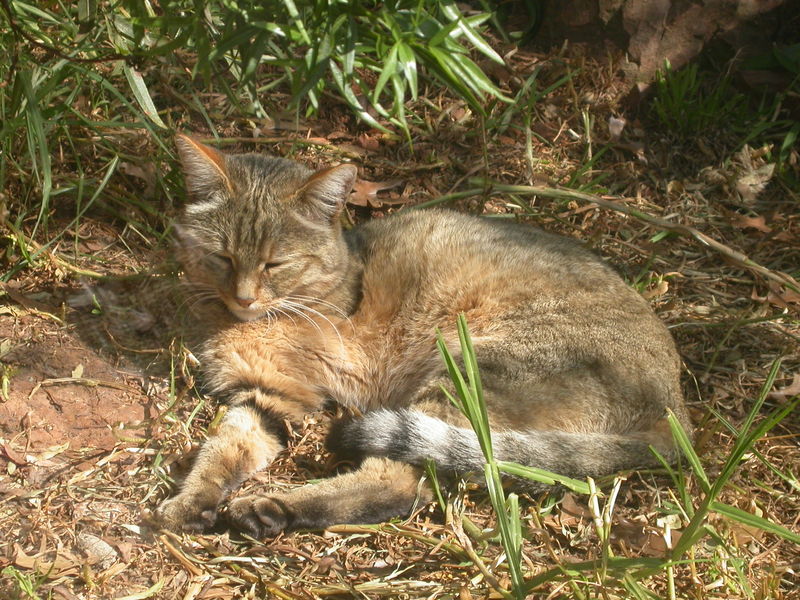
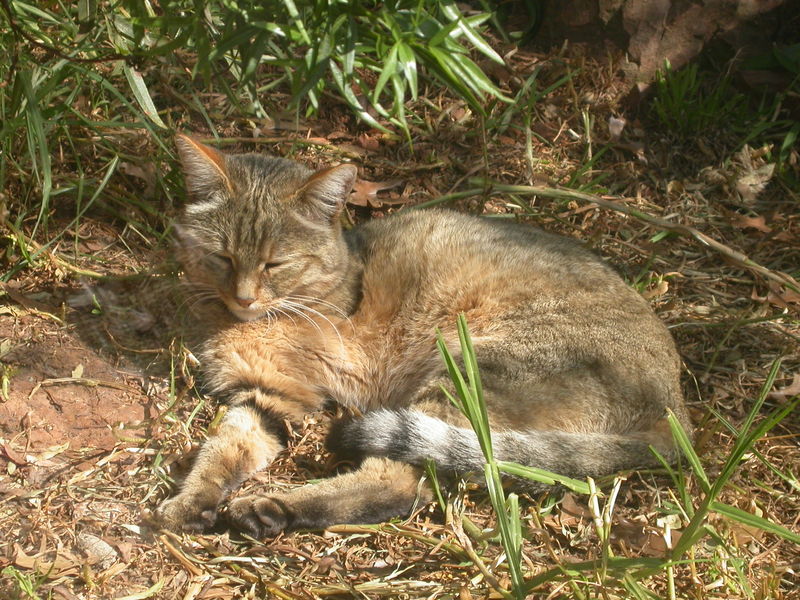
Not surprisingly, scientists think that cats domesticated themselves. Cats that didn’t mind humans lived near our granaries to catch mice and rats. Modern cats have their ancestry traced to the European Wild cat and the African Wild cat.
And the list goes on and on. Don’t forget, Guinea pigs, Llamas, Reindeer, the Silk Moth and the Turkey.
It is interesting to note that the most valuable animals, sheep, goats, cow, pig and horse were all domesticated- probably more than once- by 4000 BCE. The idea to domesticate animals, to live in close relationship occurred to humans multiple times all over the world. And that’s not all.
We find hints that perhaps in the ancient world the relationships between humans and animals were more than merely utilitarian. The famous cave paintings in France and Spain are 17,000 to 15,00 years old. By 10,000 to 8,000 BCE animals are buried with humans. About that same time, there is evidence of shamanism in Mongolia and China. A Shaman was someone who went into a trance to communicate with the animal and spirit world and was believed to assume the shape of animals. In the Neolithic period (8000-3000 BCE) humans made figurines and paintings of animals.
And today we know that animals are good for us in other ways besides food and transportation. There is a large and interesting body of work on the benefits of pet assisted therapiesand the human animla bond. The Delta Society is a great source of information about this. For example, heart failure patients have better heart function after a visit from a dog. Pet owners are more likely to survive a heart attack, and they have lower blood pressure, lower stress levels and increased mobility. We also live longer.
Trained pets are found in hospitals, nursing homes and rehabilitation centers where they improve social interactions and reduce stress.
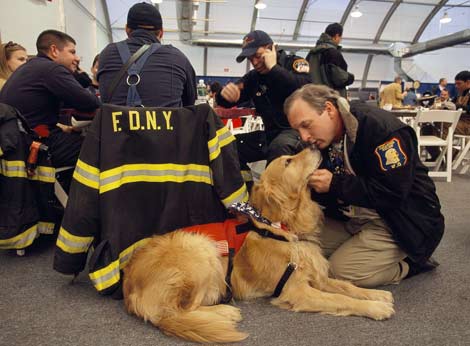
Dogs help children learn to read. There are horse riding therapy programs. There are programs for troubled teens and children where interaction with pets helps reduce antisocial behavior. There are animal programs in prisons. There are service animals for the blind and deaf. There are general assistance pets that help people live more independently by helping with daily tasks.

Why am I telling you all this? Because it amazes me that as people of faith we don’t think more seriously about this rich relationship. I wonder why we don’t.
Do we really think that it is simply unimportant?
Is our relationship with animals so familiar that we have just never really noticed what’s going on?
Does our need for power and control and status cause us to minimize the importance of animals and this relationship?
Is it because we are insecure about our place in the cosmos?
Is it possible for God to love both humans and animals?
Perhaps it is a little of all of these.
I would like to know what you think.
—-
Next week I’ll offer some thoughts about how Christians might re-think the God, animal and human relationship. As always, I’ll be interested in what you think and I welcome comments from all faith traditions.
* By the way, BCE- “Before the Common Era” is sometimes used in place of BC. And CE, “Common Era” in place of AD.


 Conversation in Faith

Leave a reply to Pain free animals « Conversation in Faith Weblog Cancel reply