When I mention the Christian practice of hospitality, what do you think about ? Perhaps it is hosting a small group in our home. Or offering coffee and donuts after church on Sundays. Having a food pantry or day space in your church is an act of hospitality. Intentionally and thoughtfully welcoming people on Sundays is an act of hospitality. Visiting the sick or those who can’t regularly participate in the life of the church is an act of hospitality. An important part of hospitality is doing various things that welcome and include people. For a long time I thought about hospitality like these examples. Hospitality was “doing” something. That’s not an incorrect way to think about hospitality.
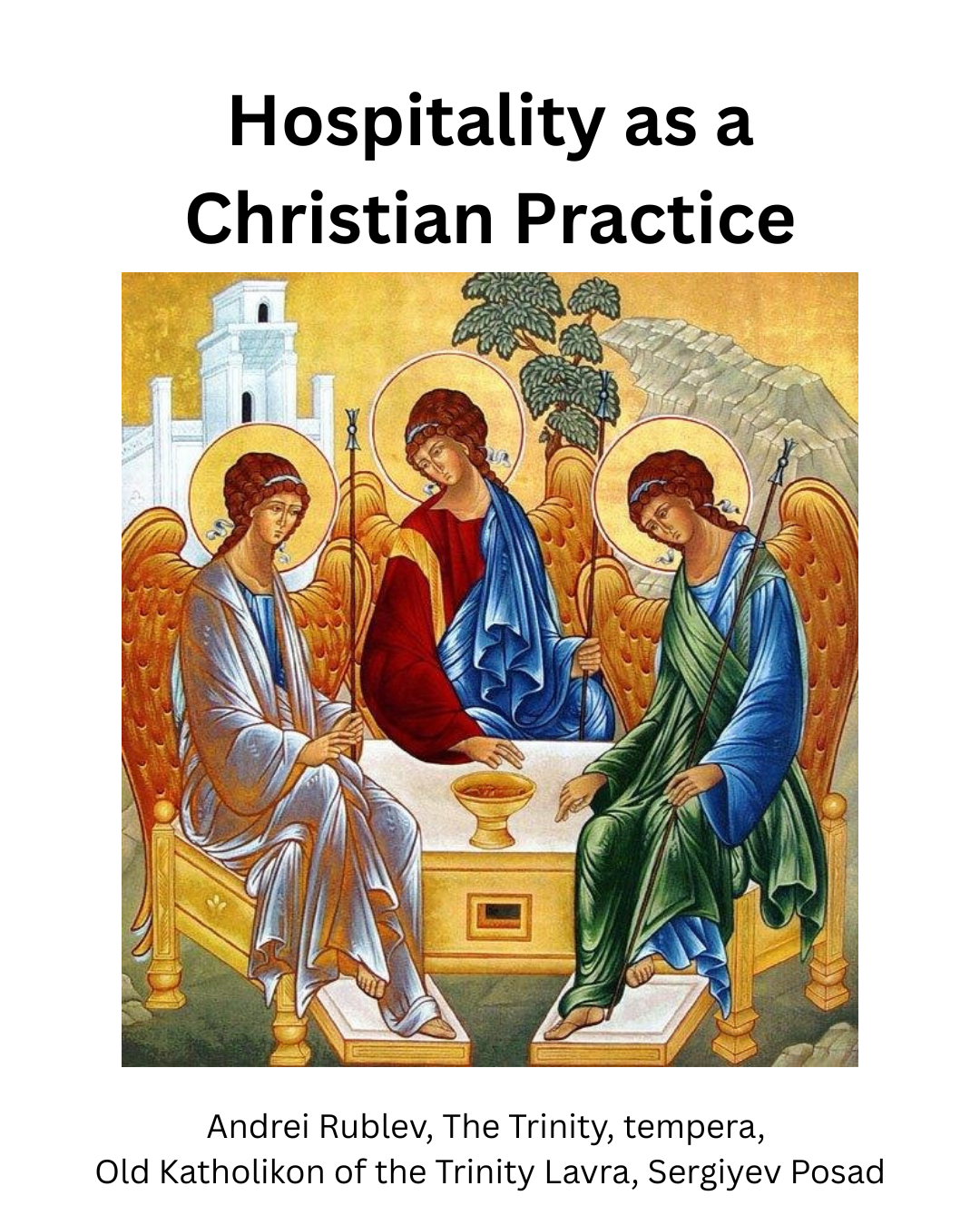
Yet, I wonder if there is more to hospitality? What if hospitality is also about “being”.
Almost two years ago1, I shared this quote from Henri Nouwen,
“Hospitality, therefore, means primarily the creation of a free space where the stranger can enter and become a friend instead of an enemy. Hospitality is not to change people, but to offer them space where change can take place…. The paradox of hospitality is that it wants to create emptiness, not a fearful emptiness, but a friendly emptiness where strangers can enter and discover themselves as created free; free to sing their own songs, free also to leave and follow their own vocations. Hospitality is not a subtle invitation to adopt the life style of the host, but the gift of a chance for the guest to find his own.2
In the same book, Nouwen writes that hospitality is a “fundamental attitude toward our fellow human beings”.
I’ve been thinking about this idea ever since- hospitality as an attitude toward others. I wonder, can I create Nouwen’s “free space” not as physically located space but as a kind of spaciousness that I carry with me wherever I am?
As I reflect on the Lenten and Easter lectionary readings for this year, I am struck by how Jesus carries “free space” with himself. Jesus’ attitude toward other people is one where people can enter as they are and become a friend rather than an enemy. Recall Jesus’ invitation to Nicodemus. His invitation to the Samaritan woman at the well or to Lazarus and his sisters, Mary and Martha. Think about how he engaged the man born blind and the Pharisees. On Easter, Jesus walks and talks with the two on the road to Emmaus and invites them into a greater understanding. Think about how Jesus comes to Thomas.
This is one of the ways Jesus engages with people. He creates and extends a free space where people can discover who they are, to discover their life as someone beloved by God.
It is common to bemoan that we live in polarized times- and we do. The question is often asked, what do we do about this? I wonder if the practice of hospitality is one way through. Particularly if we shift the question?
I recently read this:
After lecturing on a serious issue in American life, T.S. Eliot was asked, “What are we going to do about the problem you have discussed? He replied, in effect, “You have asked the wrong question. You must understand we face two types of problems in life. One kind of problem provokes the question, “What are we going to do about it?’ The other kind poses a subtler question, ‘How do we behave towards it?’ As Eliot implied, the first type of problem points to what we call normative ethics. It develops principles and identifies duties that guide behavior…The second type of problem, however, poses a different challenge. It is not to find something to do, but to find someone to be. 3
I wonder if the practice of hospitality, while asking “what do we do”, also and perhaps more importantly asks us, “who will we be”.
What kind of person do we need to be these days? Certainly there are serious problems and wrongdoing that need to be directly addressed. Absolutely. Bad behaviors that threaten the wellbeing of others need to be confronted and changed.
And also, how do we interact with the very real people we encounter? How do we interact with people, who regardless of their actions, God loves? Who does Christ call us to be to these people? How do we behave towards people who want to restrict the ability of people of color and women to vote in free and fair elections? How do we behave towards people who abduct other humans off the streets ignoring due process? How do we behave when people think gutting social safety nets around food, housing, and health care is “biblical”? Can we separate people from their beliefs and actions? Should we? How do we extend hospitality to the victims and create hospitable space for them? The practice of hospitality must be practiced personally and practiced as a society.
This is where thinking about what Jesus did is instructive. He managed to clearly condemn behaviors and advocate for a different way of living. And he also invited people into better ways of living. Of course not everyone accepted Jesus’ invitation. And yet he never withdrew his invitation.
The practice of hospitality is more than being “nice” or hosting a meal. It is a way of being. It is the creation of space for people to be who they are and the space for them to encounter Jesus and change. This free space also allows us to consider how we will be and who we will be.
This is not easy and it is not simple to do. Beginning at a personal level, I wonder how I take the free space Nouwen describes with me to the grocery store? Or into my workplace? Or a classroom? Or a social event? How do I carry the practice of hospitality into the places I go? How do I offer that free space to people I encounter? How do I offer this free space to myself and allow myself to be changed?
- Here are the posts from 2024, https://conversationinfaith.com/2024/04/25/love-in-practice/ and https://conversationinfaith.com/2024/06/13/divine-hospitality/ and this one about my cat and hospitality, https://conversationinfaith.com/2023/11/07/peppys-hospitality/ ↩︎
- Nouwen, Henri, Reaching Out: The Three Movements of the Spiritual Life, Image Books, Doubleday, 1975, 71-72 ↩︎
- Gula, Richard M., Ethics in Pastoral Ministry, Paulist Press, 1996, page 31 ↩︎


Leave a comment