People talk about speaking truth to power. Jesus routinely does just that. Jesus told this parable during what Christians now call “Holy Week”. This is the week between Jesus’ entry into Jerusalem and the Last Supper. It was a week filled with prophetic acts and speaking truth to power often through parables. Jesus entry into Jerusalem on a donkey mimicked or even mocked the Roman Empires practice of entering cities with militarized displays of power and authority. Jesus entered the Temple, and in a prophetic action overturned tables. He healed people. He encountered the religious authorities with whom he had a series of interactions. The religious elites asked Jesus where his authority came from. Part of Jesus’ answer was to tell three parables. The second of those parable is sometimes called “The Parable of the Vineyard Tenants”.1
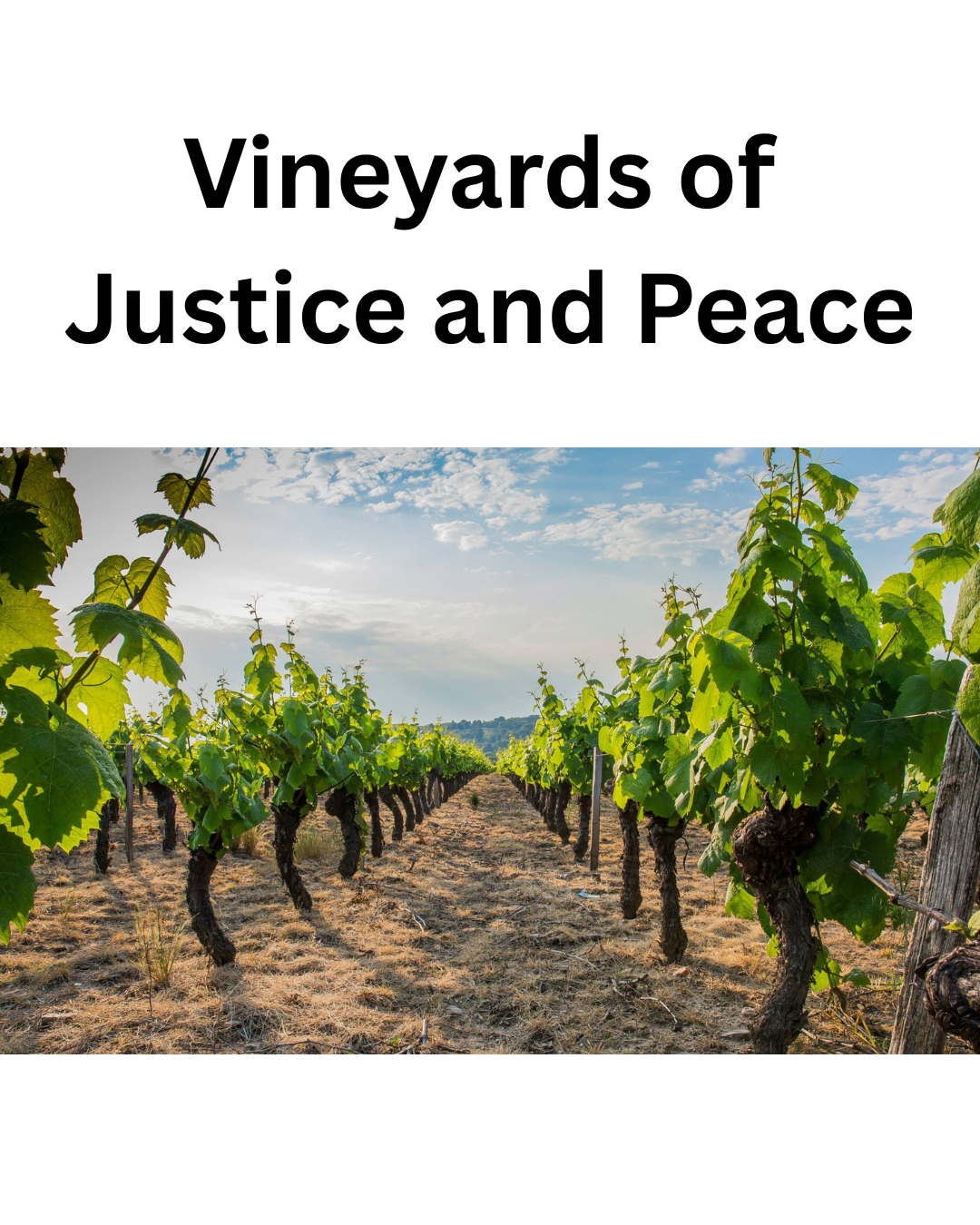
“Listen to another parable. There was a landowner who planted a vineyard, put a fence around it, dug a winepress in it, and built a watchtower. Then he leased it to tenants and went away. When the harvest time had come, he sent his slaves to the tenants to collect his produce. But the tenants seized his slaves and beat one, killed another, and stoned another. Again he sent other slaves, more than the first, and they treated them in the same way. Then he sent his son to them, saying, ‘They will respect my son.’ But when the tenants saw the son, they said to themselves, ‘This is the heir; come, let us kill him and get his inheritance.’ So they seized him, threw him out of the vineyard, and killed him. Now when the owner of the vineyard comes, what will he do to those tenants?” They said to him, “He will put those wretches to a miserable death and lease the vineyard to other tenants who will give him the produce at the harvest time.”
Jesus said to them, “Have you never read in the scriptures: ‘The stone that the builders rejected has become the cornerstone; this was the Lord’s doing, and it is amazing in our eyes’?
“Therefore I tell you, the kingdom of God will be taken away from you and given to a people that produces its fruits. The one who falls on this stone will be broken to pieces, and it will crush anyone on whom it falls.”
When the chief priests and the Pharisees heard his parables, they realized that he was speaking about them. They wanted to arrest him, but they feared the crowds, because they regarded him as a prophet. Matt 21:33-46 NRSVue
It is important we keep this parable in its context. Christianity has a long history of anti semitic and supersessionist influenced interpretations of this parable. This is not a parable about Christians replacing Jews. This is a parable told by a Jew to Jewish authorities about their responsibilities to God. Jesus was, as the text itself says, speaking to and about the religious elites. They held religious and governing power because of their relationship with the Roman Empire. This a parable calling out misplaced and misguided allegiance.
The image of God as a vineyard owner and Israel as the vineyard recalls Isaiah 5:1-7, but with a significant shift.2 Instead of a parable of judgment against the nation, it is a parable of judgment against the rulers. The people left in charge do not respect the owner or the owner’s emissaries. They do not produce fruit for the owner. They do not acknowledge the authority of the owner. They want to own the vineyard and run it for their own profit and wellbeing. Ultimately, the those who do not respect the authority of the owner are removed. New tenants are put in place. The vineyard remains under the care and authority of the owner. The new tenants produce fruit. The new tenants give to God what is due to God.
Notice that the religious elites are the ones who predict “miserable death” to the tenants of the story. Jesus does not. He says that the tenants will be replaced.
Jesus speaks truth to those in power and this truth telling is dangerous. It culminates in religious and political elites working together to try to silence Jesus and his call for his followers to live and work for the kingdom of God. To say “Jesus is Lord” is to say Caesar and his empire are not. They are not the true kingdom.
This is a parable told by a particular person in a particular place, at a particular time to a particular audience. Yet parables are stories that, by design, require us to wrestle with their message. We ought to ask ourselves, how does this parable speak to us today?
I last wrote about this parable in October of 2023, and I have to admit, I’m hearing it differently this year.3 This year I’m reading this parable in a country were Christian Nationalism is influencing churches and significant parts of our government. I’m reading this parable in a country where immigrants are terrorized and removed into camps and rendered to unfamiliar countries. I’m reading this parable in a country where wealth continues to move from the general population up to the 1%. I’m reading this parable in a country where the rich pay little to no tax. I’m reading this parable in a country where access to health care, food, housing, and clean water and air are declining. I’m reading this parable in a country where voting rights are being suppressed. I’m reading this parable in a country where LGBTQ people and people of color are being discriminated against with the support of the government.
None of this is consistent with the gospel of Jesus. Jesus’ call is not to create a theocracy. Jesus calls us to create a just, shalom filled society, guided by love of neighbor. Not love of power and money.
Midterm elections are coming up. In a democratic system, we the people decide who we want our elected officials to be. We decide what sort of nation we want to be. We have the ability and the power to take power away and to give power to others- others who will strive to produce fruits of justice and equality.
What sort of vineyard tenants are we?
- You can read about all this in Matthew chapter 21. ↩︎
- I will sing for my beloved my love song concerning his vineyard: My beloved had a vineyard on a very fertile hill.
He dug it and cleared it of stones and planted it with choice vines; he built a watchtower in the midst of it and hewed out a wine vat in it; he expected it to yield grapes, but it yielded rotten grapes.
And now, inhabitants of Jerusalem and people of Judah, judge between me and my vineyard.
What more was there to do for my vineyard that I have not done in it? When I expected it to yield grapes, why did it yield rotten grapes?
And now I will tell you what I will do to my vineyard. I will remove its hedge, and it shall be devoured; I will break down its wall, and it shall be trampled down.
I will make it a wasteland; it shall not be pruned or hoed, and it shall be overgrown with briers and thorns; I will also command the clouds that they rain no rain upon it.
For the vineyard of the LORD of hosts is the house of Israel, and the people of Judah are his cherished garden; he expected justice, but saw bloodshed; righteousness but heard a cry! Isaiah 5:1-7 NRSVue ↩︎ - You can read that post, “Authority and Faithfulness: The Parable of the Vineyard Tenants” here. ↩︎


Leave a comment