Parables meant to shake up our thinking and our preconceived ideas. They can be about and for individuals or nations or communities. Sometimes parables are about the kingdom of God. Sometimes they are about how the world should be. Sometimes parables reveal how the world actually is. In his parables, Jesus used images, and cultural assumptions of his time. Often we read parables as allegories. Sometimes we treat parables as teaching for individuals only, but sometimes parables are about society and how it functions or should function.
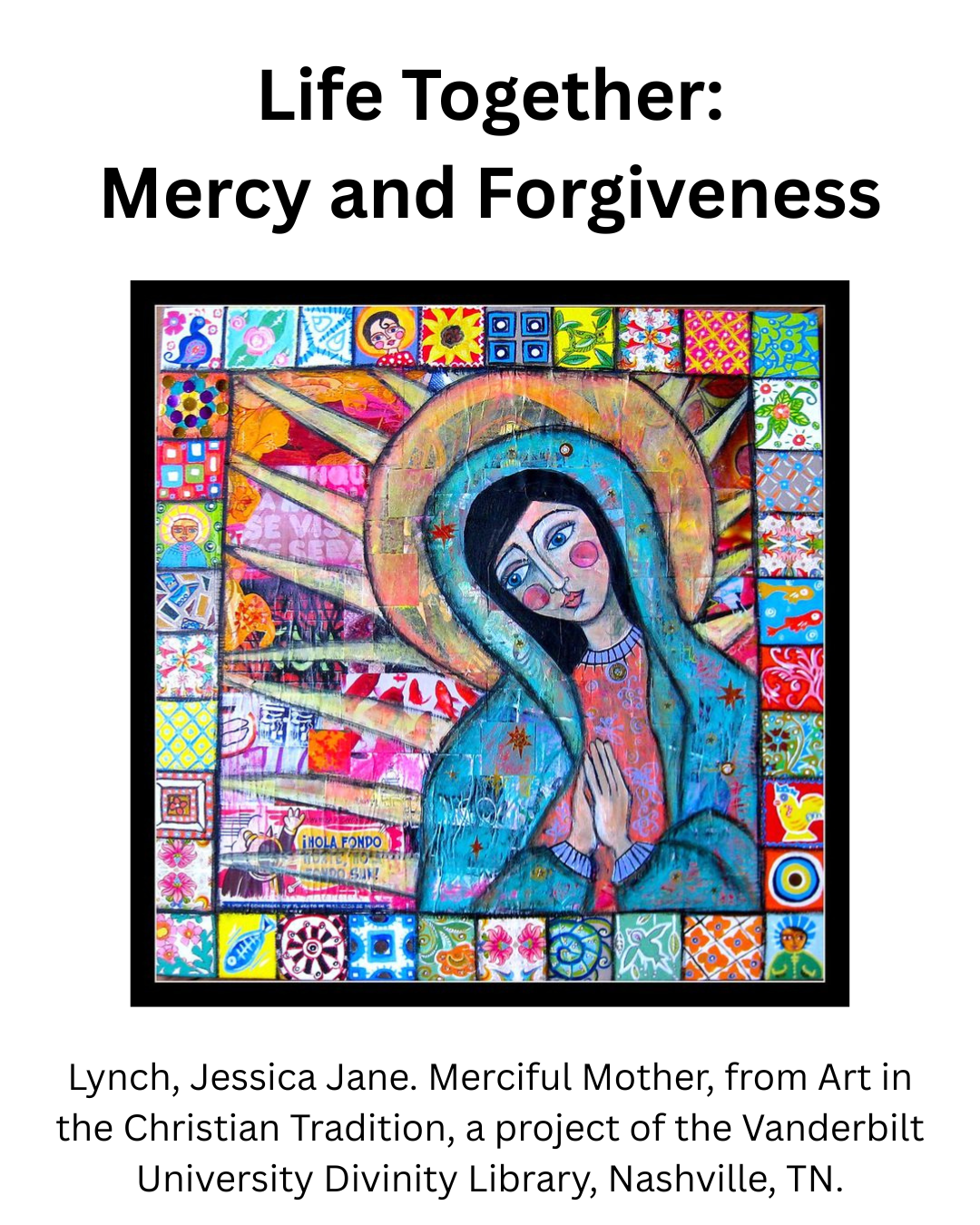
Matthew ends Jesus’ fourth discourse1 about how Jesus’ followers should live in the world with a parable. This particular parable is often treated as an allegory, with the “king” standing in for God. But should we do that? “King” is a common image for God in the Bible. But the Bible does not always present human kings in a positive way. Sometimes kings are presented positively, but not always. In Matthew’s gospel, the idea of ‘king” has also been used in a negative way describing “unfaithful and oppressive rule”.2 We can’t assume that every mention of a king, even in a parable, is describing an ideal person, or a example of how God acts.
What if we try to read the parable without allegorizing it? What if we set aside the assumption that the king in the parable is God? What if we set aside the assumption that the parable only applies to individuals? What might this parable show us?
Then Peter came and said to him, “Lord, if another member of the church sins against me, how often should I forgive? As many as seven times?” Jesus said to him, “Not seven times, but, I tell you, seventy-seven times. “For this reason the kingdom of heaven may be compared to a king who wished to settle accounts with his slaves. When he began the reckoning, one who owed him ten thousand talents was brought to him, and, as he could not pay, the lord ordered him to be sold, together with his wife and children and all his possessions, and payment to be made. So the slave fell on his knees before him, saying, ‘Have patience with me, and I will pay you everything.’ And out of pity for him, the lord of that slave released him and forgave him the debt. But that same slave, as he went out, came upon one of his fellow slaves who owed him a hundred denarii, and seizing him by the throat he said, ‘Pay what you owe.’ Then his fellow slave fell down and pleaded with him, ‘Have patience with me, and I will pay you.’ But he refused; then he went and threw him into prison until he would pay the debt. When his fellow slaves saw what had happened, they were greatly distressed, and they went and reported to their lord all that had taken place. Then his lord summoned him and said to him, ‘You wicked slave! I forgave you all that debt because you pleaded with me. Should you not have had mercy on your fellow slave, as I had mercy on you?’ And in anger his lord handed him over to be tortured until he would pay his entire debt. So my heavenly Father will also do to every one of you, if you do not forgive your brother or sister from your heart.” Matthew 18:21-35 NRSVue
It is helpful to remember that a king’s court had people who carried out the king’s wishes and the king’s business. The king’s business included collecting taxes, tribute, and managing the king’s financial affairs. In the Roman Empire, some of those people would have been enslaved. It is likely that the enslaved person in this parable functioned as an official or retainer for the king. Ten thousand talents is a lot of money, but it’s not an impossible sum. Josephus tells us that Rome required this amount of money from Judea after it was conquered in the 60s BCE.3 To be responsible for this amount of money, this enslave person likely had great responsibility and influence.
It is helpful to read this parable looking for what would have been surprising or unsurprising to the original audience.
It is not surprising that the king orders the person, his family, and possessions to be sold to pay the debt. Kings had the power to do that.
What is surprising is that the king changes their mind about selling the enslaved person. Even more surprising, the king doesn’t require repayment, he forgives this enormous debt!
The forgiven enslaved person is in a position of power over the second enslaved person in the story. A hundred denarii was a substantial sum of money, but not impossible to repay. The forgiven enslaved man uses his power over the second man in a harsh and demanding way and imprisons him. But perhaps this was not, for the original audience, a surprising act. Imprisoning debtors and people selling themselves or their children into slavery over debt was what happened in an economy and empire that extracted resources from the population.
But then the parable takes another surprising turn. Other enslaved people, upset by what has happened, approach the king and tell him about the unjust treatment of the second enslaved person. Even though the action was legal, they knew it was unjust. The other enslaved people didn’t accept that there was nothing they could do. They didn’t accept that this was just the way things were. They spoke up and spoke out to the king. Their actions changed things. Although the parable doesn’t say what happened to the imprisoned person, it implies they were freed.
Surprisingly, the king changed his mind again! The previously forgiven enslaved person was punished for his actions and was made responsible for his original debt.
Scholars sometimes talk about this parable in terms of honor and shame. The king by forgiving the debt shames the enslaved man. The king may have been acting out of power and domination rather than actual mercy. The first enslaved person, by imprisoning the second person, may have shamed the king. By acting as kings typically acted, he may have called the kings merciful actions into question.
The parable is about power and mercy. It is about how power and mercy are used by kingdoms, and groups, and individuals, The king granted mercy and then revoked it. The first enslaved man was merciless toward another. Both people used the power they had to control others. The group of enslaved people who went to the king organized and used what power they had to call for justice.
This is a disturbing parable, whether we allegorize it or not. Is this how we are to act? Is this how God acts? Sometimes parables are not so much about what should be, as they are about what is. Perhaps Jesus, in this parable is saying, in effect, this is how the world works. Even acts of apparent mercy can be, in fact, acts of power and control.That kind of “mercy” is not true mercy, it can be revoked. It is not true mercy. It is not true forgiveness.
The text gives us some clues about how to think about this parable. The final words that Jesus said are that we need to “forgive your brother or sister from your heart.” “From your heart” seems important.
Just before this parable, Peter wondered how often we must forgive, and asked, do we forgive even up to seven times? Jesus answer was to say, not just seven times but rather seventy seven times. The parable is situated between these statements about forgiveness.
Then Jesus says “For this reason the kingdom of heaven may be compared to a king….” We often assume the comparison means that this is how we should act. Perhaps we are to notice how these actions, of both the king and the enslaved person do not compare well with what Jesus has told us about the kingdom of heaven. Perhaps it is a cautionary tale about the world as it is. We are to compare what Jesus has taught about the kingdom of God and the way the word actually functions.
But notice one more thing. In the middle of the parable, a group of enslaved people act. They spoke up. They acquired a sort of justice. They got the justice that was possible in an unjust system. Perhaps part of the meaning of this parable is that we need to speak up when we encounter injustice. If we don’t speak up, nothing changes. We have the system we have, until we change it. Until we start truly forgiving- from the heart- we may have a society where power and control pretend to be mercy and forgiveness.
In the Old Testament, Israel came to believe that the destruction of the nation and their exile was the result of their lack of justice for the poor. and a lack of mercy. This is a theme of all the prophets. The needy have been trampled. They have been treated unjustly. The poor and powerless have been exploited and taken advantage of. The result of allowing this lack of justice and mercy to persist was the destruction of the nation. Actions have consequences, both for individuals and for nations.
Jesus didn’t get in trouble with the various authorities because he told people to behave and to be nice. That sort of teaching is not a problem for people in power, then or now. Jesus gets in trouble because he is calling for a new social and political order. He calls for a society where extravagant forgiveness is the norm. He is calling for the kingdom of God where mercy and justice are present. He is calling for a kingdom where people are not enslaved, where people don’t need to sell themselves or their children to survive.
Actions have consequences and there are consequences for a false mercy, and insincere forgiveness, and an just, oppressive society.
We can do better. We can require better from our leaders and from ourselves. Bad actions have consequences. But good and just and merciful actions have consequences also.
- Matthew collects many of Jesus’ teaching into five discourses, Ch 5-7 the Sermon on the Mount, Ch 10 Mission, Ch 13 Parables, Ch 18 Community relationships and practices, and Ch 24-25 God’s coming empire. ↩︎
- Carter, Warren, Matthew and the Margins: A Sociopolitical and Religious Reading, Orbis Books 2001, page 370. Carter cites, Matthew 1:6b-11; ch 2; 6:29; 14:1-12; 17:25; 20:25. ↩︎
- Carter, 372 ↩︎


Leave a comment